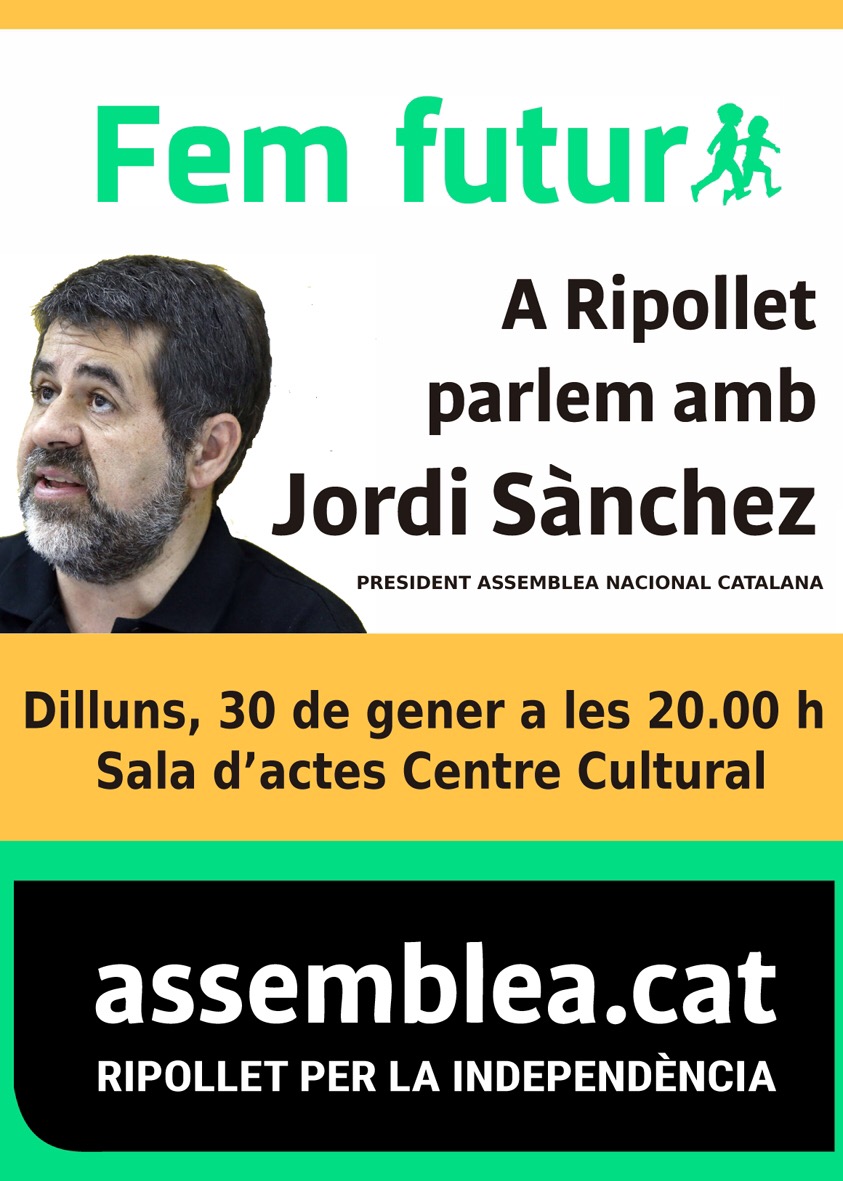
25 de febrer, l’educació a debat: “Estructura, organització i recursos”

Dins de la campanya Fem futur, l’Assemblea Nacional Catalana organitza el cicle “L’educació a debat“. 

La primera jornada serà el dissabte 25 de febrer i tractarà el tema  “Estructura, organització i recursos” i es farà a la seu de l’ANC, Marina 315 de Barcelona, de les 11:00 a les 13:00.

Hi participaran Àngel Domingo, inspector d’Ensenyament i Joan Pere Le Bihan, director de la Bressola entre 1981 i 2012.

La fiscalia atempta contra l’Estat de Dret

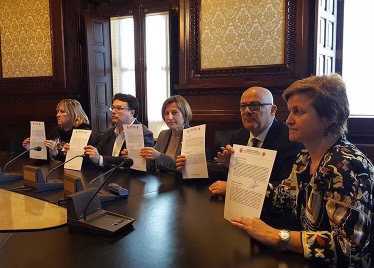
La fiscalia general de l’Estat ha presentat una segona querella pels delictes de prevaricació i desobediència contra la presidenta del Parlament, Carme Forcadell, i els altres tres membres de Junts pel Sí de la mesa del Parlament, Lluís Corominas, Anna Simó i Ramona Barrufet.
La fiscalia deixa fora de la querella Joan Josep Nuet perquè la “falta de voluntat de sumar-se al projecte polític de ruptura unilateral amb el sistema constitucional s’infereix de la seva trajectòria com a diputat”.

Es tracta d’un escrit sense precedents, que davant un mateix fet objectiu ataca uns diputats i en deixa uns altres de banda per un judici d’intencions. Això demostra una persecució discriminatòria del tot impròpia d’un Estat de Dret.

L’escrit també demostra la progressiva ideologització de la fiscalia, que en comptes de defensar l’Estat de Dret es dedica a defensar l’aparell de l’Estat.

Aquest menysteniment total de la fiscalia a l’Estat de Dret es produeix quan es compleixen 36 anys del cop d’Estat del 23F. Llavors, un tinent coronel de la Guàrdia Civil va haver de fer la feina bruta d’una part de l’aparell de l’Estat i va acabar a la presó.

Assemblea Nacional Catalana 

Vídeo “Parlem de drets socials”

Aquest és el vídeo de la campanya Fem Futur titulat “Parlem de drets socials”

Espot de la campanya Fem futur “Parlem de drets socials”

Aquest és el vídeo de 20 segons de la campanya Fem futur “Parlem de drets socials

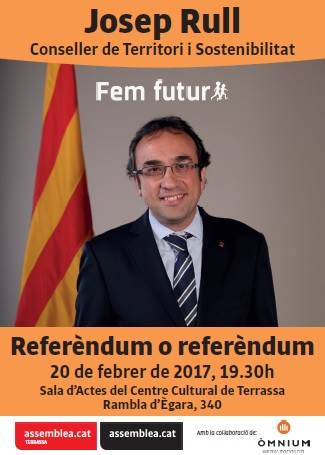
20 de febrer, a Terrassa, Josep Rull parlarà del referèndum

Dilluns 20 de febrer, a Terrassa, Josep Rull, Conseller de Territori i Sostenibilitat de la Generalitat de Catalunya, parlarà sobre el referèndum d’independència.

L’acte serà, a les 19:30, a la Sala d’actes del Centre Cultural. (Rambla Ègara, 340)

16730680_1050856635021108_3857015734669753684_n.jpg

Vídeo en record de Muriel Casals

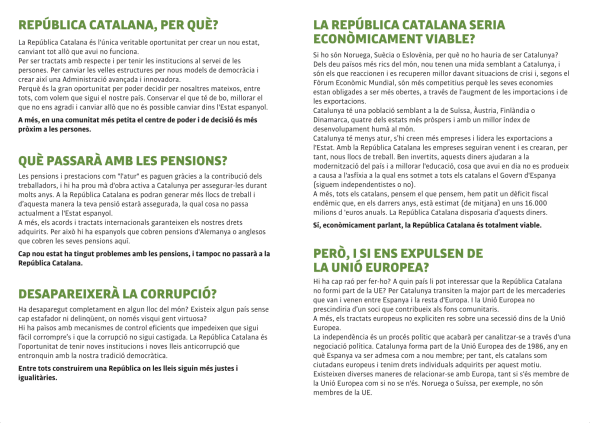
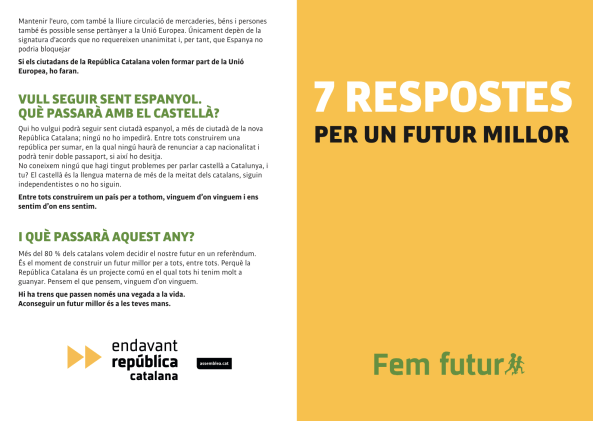
Fulls “7 respostes per un futur millor”

Aquests fulls volen donar respostes a les preguntes que més es pot fer la gent sobre la República Catalana.

Captura de pantalla 2017-02-11 a les 21.20.58.png

Captura de pantalla 2017-02-11 a les 21.21.05.png

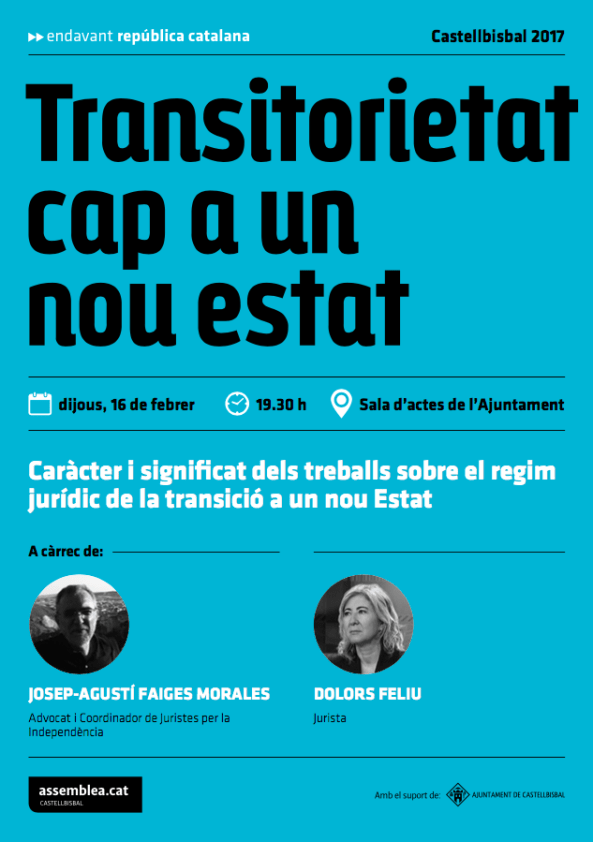
16 de febrer, a Castellbisbal, debat “Transitorietat cap a un nou estat”

El dijous 16 de febrer es farà, a Castellbisbal, un debat amb Josep-Agustí Faiges i Dolors Feliu, juristes tots dos, sobre el règim jurídic de la transició a un nou estat.

Es farà a les 19:30 a la sala d’actes de l’Ajuntament.

Captura de pantalla 2017-02-10 a les 0.08.02.png

Vídeo de la recepció del president Carles Puigdemont al Cos Consular a Barcelona

Aquest és el vídeo de la recepció del president Carles Puigdemont al Cos Consular a Barcelona de l’1 de febrer de 2017. Hi ha intervingut el mateix Carles Puigdemont, el conseller d’Afers Exteriors, Raül Romeva i la cònsol més veterana a la ciutat, la del Perú, Franca Lorella.

Defending Freedom in Catalonia

Article de la presidenta del Parlament, Carme Forcadell, publicat al The New York Times el 30 de gener de 2017.


BARCELONA — Are the interests of citizens in a democratic parliament debatable? This is what is at stake in Catalonia, where parliamentary deputies demand the right to exercise their freedom of speech, while the Spanish government says they must accept being censored.

Last July, the Catalonian Parliament debated a report on the road map to independence in Catalonia, and voted on it. Afterward, the state prosecutor filed a complaint that charged me with contempt of court and neglect of duty. My crime was simply to fulfill my duties as president of the Parliament in allowing a debate that had been requested by a majority in the chamber.

This is just one more example of the Spanish government’s strategy of using judicial measures to interfere in the political affairs of Catalonia. And because this government is unable to resolve political challenges through politics, it is using a politicized court system to silence dissent and democratic debate.

What is happening in Catalonia is a judicial assault by Spain on Catalonian democracy and freedom of speech, an assault that violates the principle of the separation of powers that is the foundation of the rule of law in this country.

This violation was denounced as far back as 2010 in a manifesto signed by 1,400 judges, which warned of an excessive politicization and loss of independence in Spain’s judicial branch. In 2014, three Spanish judicial associations warned the United Nations special rapporteur that several initiatives of the Spanish government were “eroding the principle of separation of powers.”

Catalan elected officials who favor independence are now the target. More than 400 town and city councilors, and mayors, have been charged with offenses because of their legitimate advocacy for independence. The previous president and other members of the Catalonian government are to be put on trial merely for organizing a public consultation in 2014 on independence in which more than 2.3 million Catalans participated. Their crime was setting up polling stations so that citizens could express their democratic views.

Aware of the negative publicity its measures have received abroad, the Spanish government has tried to improve its image by rolling out a program called “Operation Dialogue.” This cosmetic initiative, devoid of content, is discredited with every new charge or arrest. Spain’s turn toward judicial authoritarianism continues unchecked.

When the pro-independence Scottish National Party won the 2011 parliamentary elections and formed a government in Scotland, Britain’s prime minister at the time, David Cameron, understood the magnitude of the challenge — and solved it through politics. He agreed with the government of Scotland that it would hold a referendum on independence. The independence movement lost this referendum, in 2014, by 45 percent to 55 percent, but democracy was the winner.

As is true of Scottish nationalism, Catalan politics and society have a profoundly pro-European character — very different from the Euroskeptic movements that have championed Brexit and from the demands of the far-right populists who are increasingly making their mark on the European Union.

Britain’s approach toward Scottish independence also contrasts sharply with the Spanish government’s toward Catalonia. Although the independence movement won 48 percent of the vote and an absolute majority in Parliament in Catalonia’s 2015 elections, the Spanish government has shunned negotiation. Instead, it has bet all its chips on repression. The Spanish government’s restrictive interpretation of the Constitution, which ought to be the guarantor of citizens’ rights and freedoms, has turned it into a shield against dialogue.

Catalonia’s Parliament is a pluralistic assembly that reflects the diversity of Catalan society and permits the expression of all voices and opinions. There, those in favor of independence and those against it — both legitimate options — can debate and vote freely. That is why Catalonia will draw a line in the sand in defense of its parliamentary freedom.

The solution to the situation is not to suppress debate, but to allow democratic, free and informed citizens to be heard. A recent poll showed that more than 80 percent of Catalans favor deciding their future through a referendum. This is, therefore, a majority demand that Catalonian institutions plan to carry out in September, even though the Spanish government has stonewalled and obstructed all efforts by Catalonia to reach an agreement on holding a vote.

In December, before an examining magistrate, I argued that no court has the right to prevent talk of independence in the Parliament of Catalonia, any more than it could suppress discussion of any other subject of interest to citizens. We will not open our doors to censorship. We are committed to preserving the right of free expression for all deputies, no matter what they think and how they vote.

This is the foundation of democracy and freedom, attained at such a high price in all democratic societies. “Liberty, when it begins to take root, is a plant of rapid growth,” George Washington wrote. True enough, but the fight for civil rights and liberties must be constant and unwavering, for history has shown how easy it is to lose them.

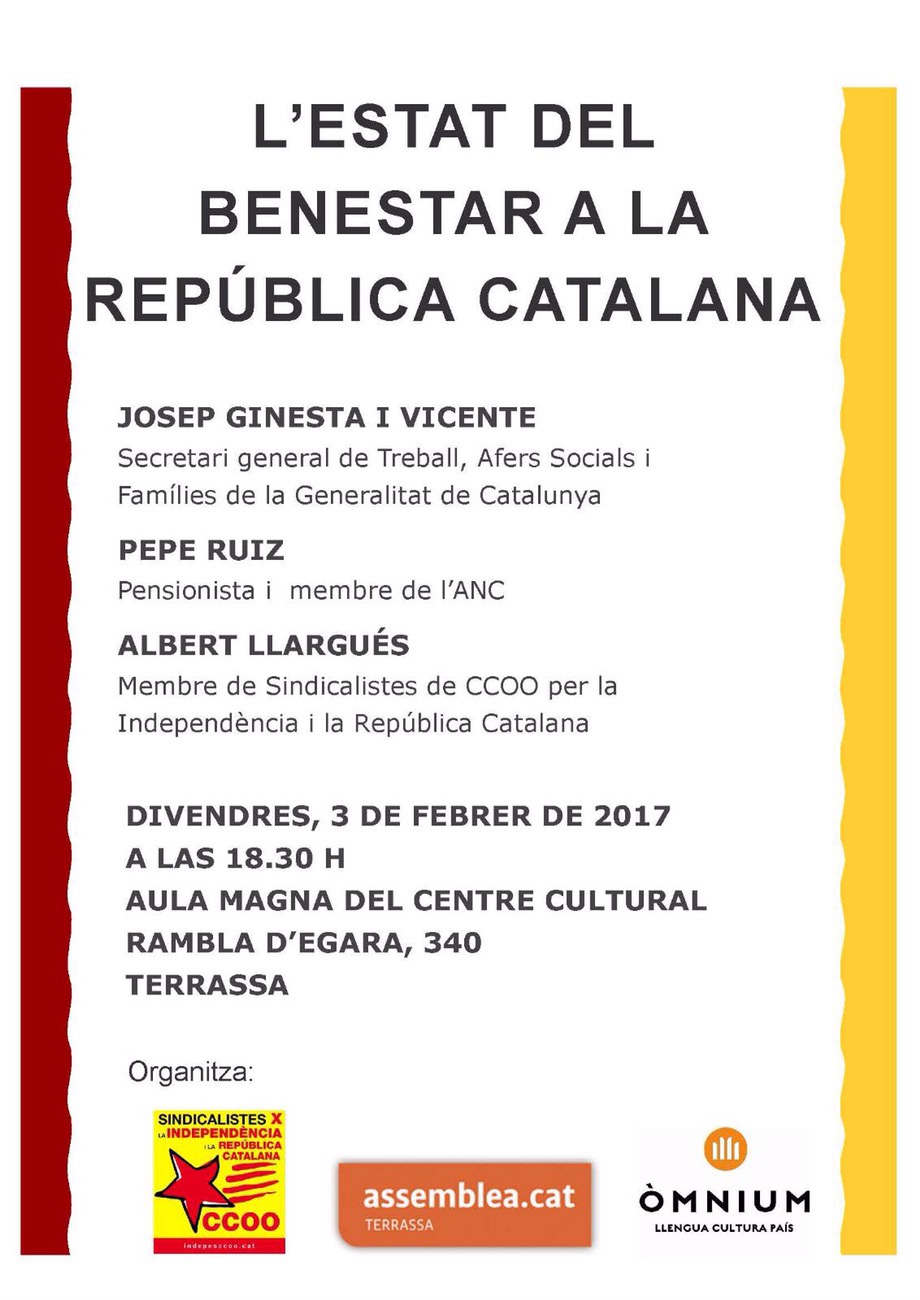
3 de febrer, a Terrassa,  “L’Estat de Benestar a la República Catalana”

Organitzada pels Sindicalistes per la Independència i la República Catalana (SIRC), el proper divendres 3 de febrer a dos quarts de set, tindrà lloc la conferència “L’Estat de Benestar a la República Catalana“.

Comptarem amb Josep Ginesta, Secretari General de Treball, Afers Socials i Famílies de la Generalitat, amb Pepe Ruiz, pensionista i membre de l’ANC- Terrassa per la Independència i amb Albert Llargués, membre de Sindicalistes de CCOO per la Independència i la Repúblcia Catalana.

Serà a l’aula Magna del Centre Cultural de Terrassa, Rambla d’Ègara 340 de Terrassa.

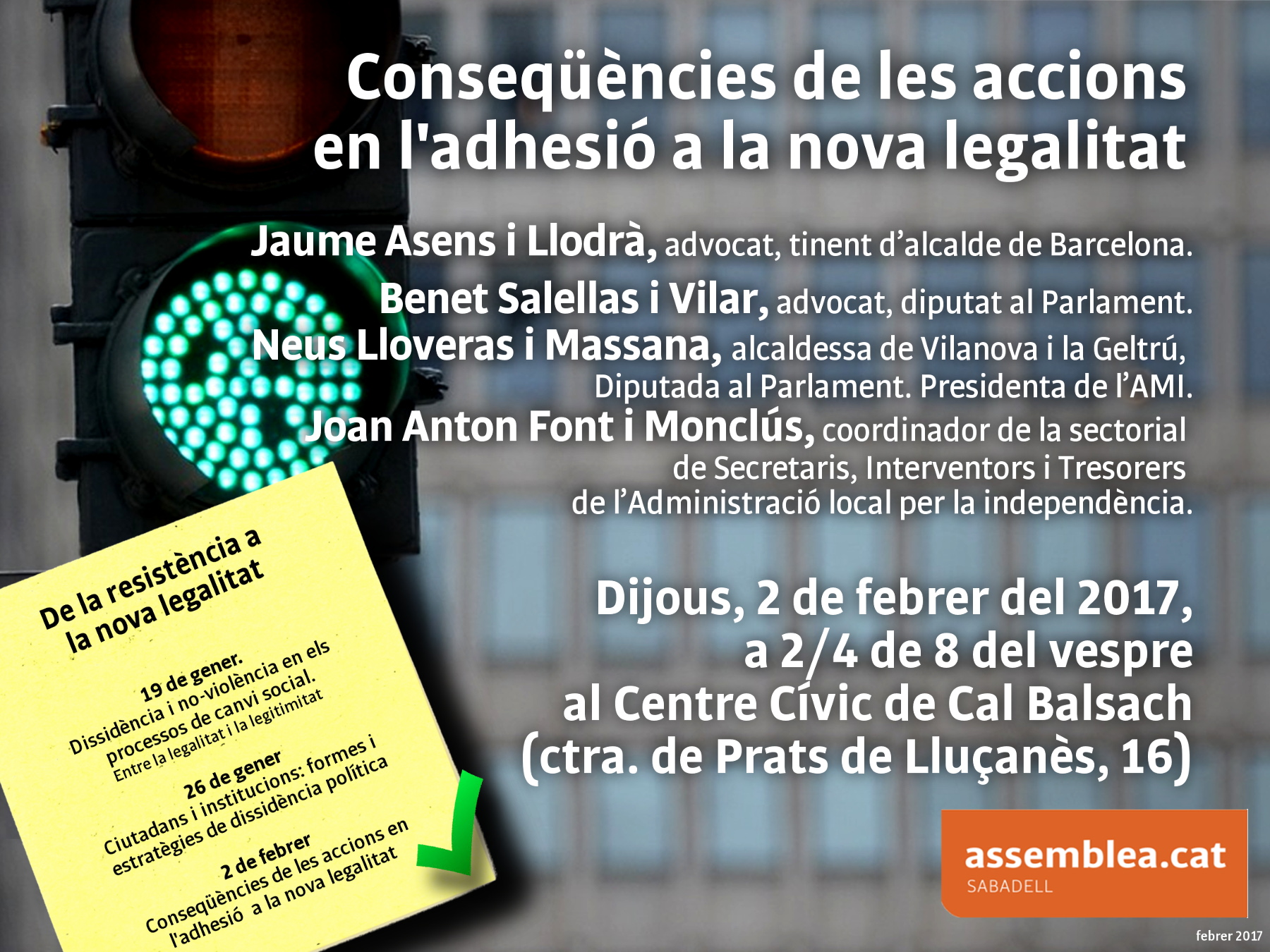
A Sabadell, el 2 de febrer parlarem de les conseqüències de les accions en l’adhesió a la nova legalitat

SONY DSC

Com a tancament del cicle De la resistència a la nova legalitat, us convidem a la taula rodona Conseqüències de les accions en l’adhesió a la nova legalitat que farem a Sabadell el dijous, 2 de febrer de 2017, a dos quarts de 8 del vespre, al Centre Cívic de la Creu Alta – Cal Balsach (ctra. de Prats de Lluçanès, 16; vegeu el mapa).

Comptarem amb la participació de:

Vídeo de la xerrada de Lluís Llach, a Rubí, del 23 de gener

Aquest és el vídeo de la xerrada que va fer el diputat Lluís Llach, al Casal Popular de Rubí, el passat 23 de gener de 2017.

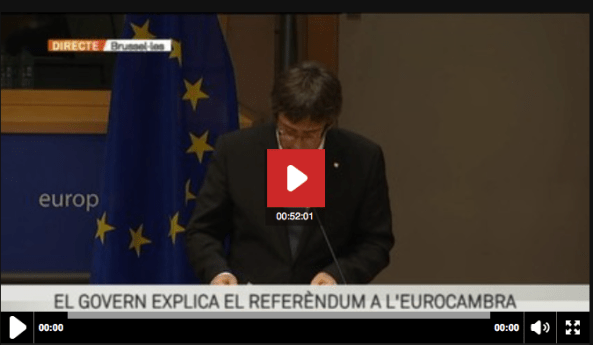
Vídeo de la conferència de Carles Puigdemont, Oriol Junqueras i Raül Romeva al Parlament Europeu

Conferència íntegra de Carles Puigdemont, Oriol Junqueras i Raül Romeva al Parlament Europeu per exposar la voluntat de fer un referèndum a Catalunya.
Clica la imatge per veure-la.

Clica la imatge per veure-la.

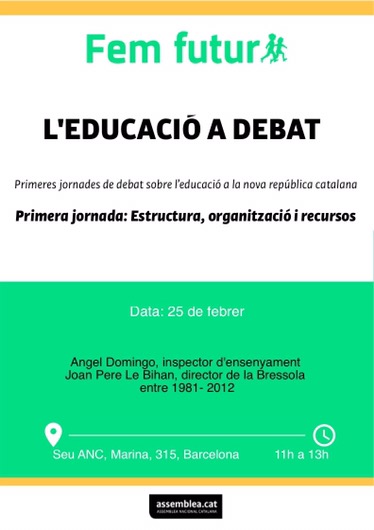
El 30 de gener, a Ripollet, debat amb Jordi Sànchez

A Ripollet, el dilluns 30 de gener, al Centre Cultural, Jordi Sànchez debatrà amb els assistents el moment polític que viu el país. L’acte començarà a les 20:00.