
Category Eines
“Singulars” i “Versió RAC1” amb Agustí Bordas sobre la independència de Catalunya i la seva viabilitat.
Agustí Bordas és llicenciat en Ciències Polítiques i té un alt càrrec a l’administració del Canadà. En l’Entrevista amb Jaume Barberà tracta les opcions que té Catalunya per esdevenir un nou estat a Europa.
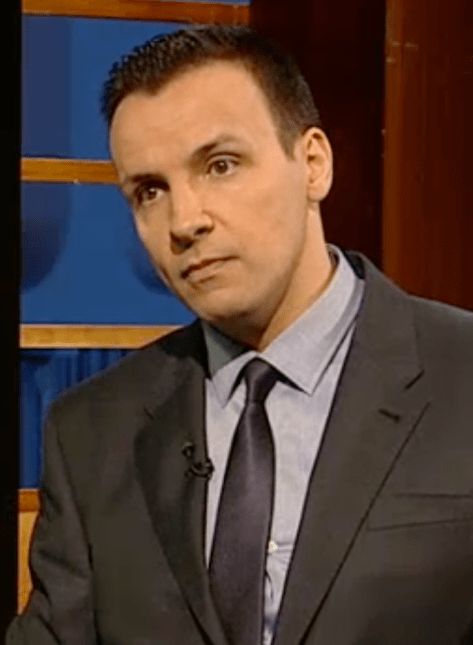

Entrevista a Agustí Bordas al programa “Versió RAC1”
Nova campanya de captació de socis de l’ANC
L’ANC inicia una campanya de captació de socis amb la vista posada a l’assemblea general.
“Necessitem la teva força per continuar empenyent Catalunya. Amb poc fem molt”. Aquesta és la idea força de la nova campanya de captació de socis de l’Assemblea Nacional Catalana (ANC) que es realitza durant el mes de gener. L’objectiu és créixer i ampliar l’extensió territorial de l’ANC davant el repte majúscul de consolidar la majoria social favorable a la independència davant la consulta del 2014 i, i, a la vegada, contribuir al manteniment i als projectes de l’Assemblea, que es finança únicament a través de les quotes dels seus associats.
Entre d’altres, la campanya serà present a la ràdio i la xarxa amb l’emissió d’una falca i la publicació de diversos vídeos. El primer és un repàs de les diferents etapes i accions encapçalades per l’ANC en els seus deu mesos de vida, i precedirà els que es publicaran la setmana que ve, en què diverses personalitats que formen part de l’Assemblea faran una crida a inscriure-s’hi i treballar-hi.
Amb la campanya, l’ANC reforça l’impuls d’inscripcions viscut des de la seva constitució el passat 10 de març, i potenciat des de l’11 de setembre. Actualment, l’Assemblea compta amb 12.000 inscrits i 7.000 simpatitzants.
Assemblea General
Tal com marquen els Estatuts, l’ANC celebrarà la seva assemblea general el proper mes de març, en què s’escolliran les possibles modificacions d’Estatuts i del full de ruta de l’entitat per adequar-lo al nou escenari polític generat arran de la històrica marxa de l’Onze de setembre. A l’assemblea hi podran participar tots els membres de ple dret de l’ANC inscrits i al corrent de pagament fins el 31 de gener.
Aquí teniu la falca de ràdio i el vídeo:

Vídeo sobre el Barça i Catalunya de la CBS americana subtitulat en català.
Vídeo facilitat per Vilaweb
Aquest vídeo de 15 minuts sobre el Barça i Catalunya l’ha emès la cadena nord-americana CBS i pot haver tingut una audiència de 16 milions de persones. El programa “60 minutes” on anava inclòs l’emeten 100 cadenes més de tot el món.
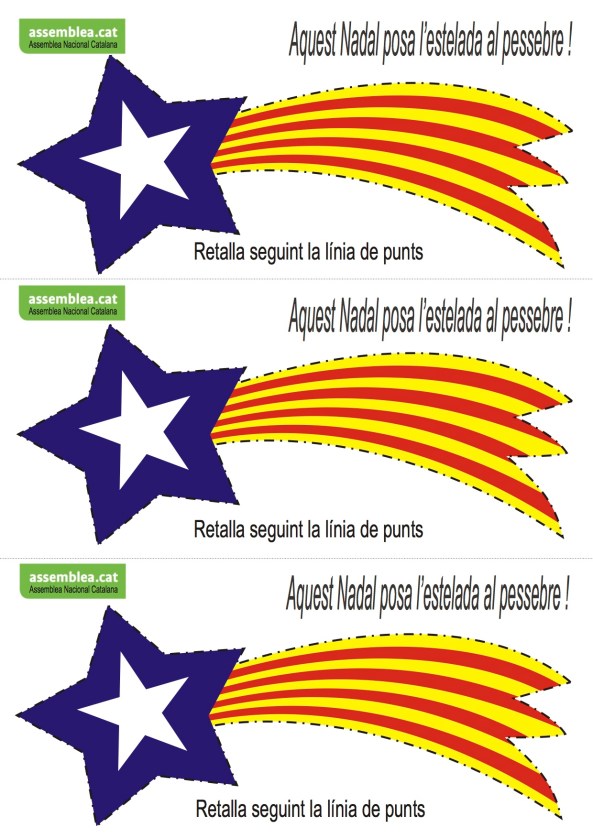
Com fer un fanalet amb estelada
Encara que els reis han passat, ens queden estels per seguir camí de la llibertat.
Des de Vic arriba un projecfe de fer un fanalet que pot servir per fer unes manualitats amb els nanos, per sorprendre als veïns o per posar caliu a les nits d’hivern.
Aquest és el procés:
“El repte de decidir” resum d’un 2012 decisiu
Resum del 2012 de TV3 amb un pes molt alt de la manifestació de l’11 de Setembre i del procés cap a la independència.
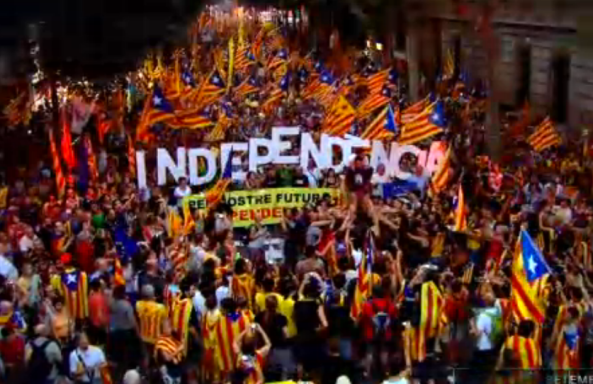
Cicle de taules rodones “La Catalunya independent que volem”
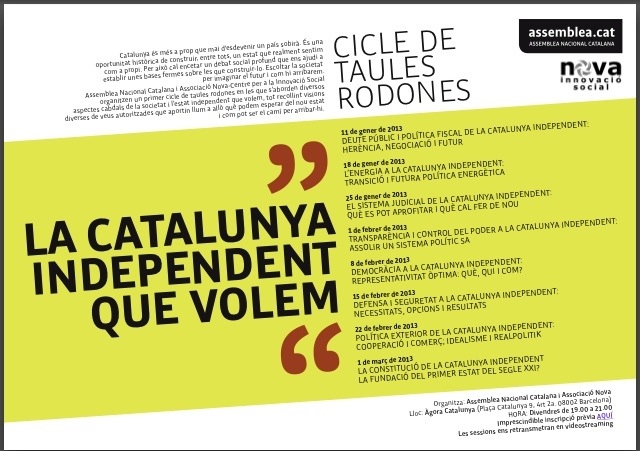
L’Assemblea Nacional Catalana i Associació Nova-Centre per a la Innovació Social organitzen un primer cicle de taules rodones en les que s’aborden diversos aspectes cabdals de la societat i l’estat independent que volem, tot recollint visions diverses de veus autoritzades que aportin llum a allò què podem esperar del nou estat i com pot ser el camí per arribar-hi.
Les sessions tindran lloc els divendres, a partir de l’11 de gener, a Àgora Catalunya (Plaça Catalunya 9, 4rt 2a. de Barcelona)
És imprescindible fer una inscripció prèvia AQUÍ
Les sessions ens retransmetran en videostreaming.
“Hem fet història” un llibre per no oblidar
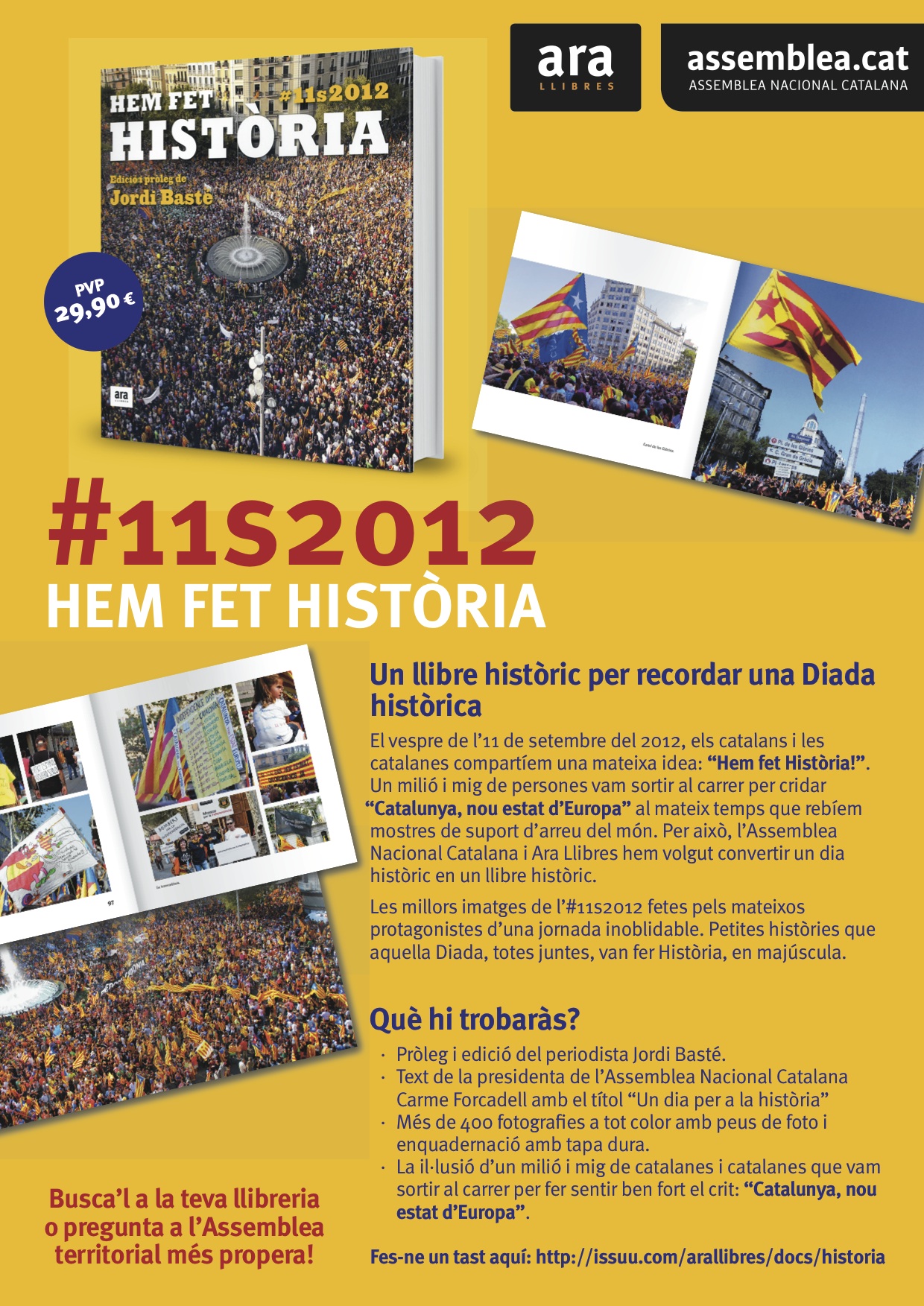
Us presentem el llibre #11s2012 Hem fet història. Un recull de les millors imatges de la gran manifestació de l’11 de setembre de 2012, fetes pels mateixos protagonistes d’aquella jornada inoblidable.
Més de 400 fotografies a tot color amb peus de foto i enquadernació amb tapa dura. El periodista Jordi Basté n’ha fet el pròleg i també hi ha un text de la presidenta de l’ANC, Carme Forcadell, amb el títol Un dia per a la història.
El llibre ha estst editat per ARA llibres amb la col·laboració de l’ANC. Les AT podreu fer comandes d’aquest llibre a marxandatge.
A més, hi ha prevista una exposició que recollirà les millrs fotos del llibre. La podreu demanar també a marxandatge i us pot servir com a element de presentació.
Per Nadal poseu l’ESTELada al balcó

El calendari de TxI, un regal independentista
 Terrassa per la Independència (TxI)
Si busqueu un regal independentista i baratet per aquest nadal podeu comprar el calendari de TxI del 2013. A cada mes hi teniu una fotografia d’algun dels actes que ha organitzat o participat TxI i un pensament. Tot això per només 8€.
Si us interessa el podeu trobar a la botiga tresdedeu al carrer Portal Nou 12 de Terrassa. Si no sou de Terrassa el podeu encarregar via la vostra assemblea territorial i mirarem de fer-vos-el arribar.
L’Operació Garzón contra l’independentisme català
Documental íntegre sobre l’Operació Garzón que Llibertat.cat publica amb motiu del 20è aniversari de l’inici dels Jocs Olímpics.
Recollida de signatures perquè Obama es pronunciï sobre l’autodeterminació
Hi ha una iniciativa per recollir 25.000 signatures perquè el president dels Estats Units es pronunciï sobre el procés d’independència català.
Aneu a aquest enllaç i afegiu-vos a les signatures.
El dissabte 1 de desembre ja s’han superat les 25.000 signatures. La xifra segueix creixent.

Vídeo íntegre de la presentació de “Delenda est Hispania” amb l’autor Albert Pont
Presentació feta a Vilaweb
Informacions de la premsa internacional sobre les eleccions del 25N
The New York Times: Catalan Vote Could Be a First Step Toward Self-Rule
Le Monde: L’indépendance, enjeu des élections en Catalogne
The Guardian: Catalonia independence timetable: ‘Once it has started it cannot stop’
The Wall Street Journal: Catalonian Calls for Independence Increase
Radio Vaticana: La Catalogna si prepara al voto: favorito il partito indipendentista
Die Weilt: Katalanen haben Spaniens Geldpolitik satt
Telegraaf: Catalonië stemt over zichzelf
Excelsior: En Cataluña votan por su independencia
Visao: Catalunha: O ‘país petit’ no seu labirinto
Reuters: Immigrants and youth drive Catalan independence movement
France24: La Catalogne face à la tentation séparatiste
El Telégrafo de Ecuador: Proyecto independentista da el primer paso en Cataluña
Le Figaro: La Catalogne vote sur le chemin de l’indépendance
Libération: Vers un référendum d’autodétermination après les législatives
The Times: Should it stay or go? Catalonia faces its moment of decision
Aftondbladet: Katalansk flirt med EU
The Washington Post: What would happen if Catalonia seceded from Spain?
Il Sole/24ore: Catalogna, la Regione che vuole farsi Stato
La Stampa: Nel cuore della Catalogna ribelle “Addio alla dittatura di Madrid”
The Scotsman: Catalonian vote will decide future of Spain
Wiener Zeitung: Separatisten vor Sieg in Katalonien
tvi24: Eleições Catalunha: e se Espanha ficasse sem Puyol, Xavi e Fàbregas
Le Point: Espagne : la Catalogne serait la septième puissance d’Europe
n-TV: Katalonischer Präsident Mas : Das Streben nach Unabhängigkeit
The Australian: Catalan leader seeks ‘freedom’ in election
TeleSur: Cataluña podría avanzar aún más en su empeño de ser estado soberano
Aavaz: Catalonia: Adios to Spain?
Dee Standaar: Kijken naar Catalonië
Goteborgs-Posten: “Katalonien får ställa sig i kön till EU”
Wales Online: Independence? Europeans may soon be witnessing the birth of a new state …
Le Devoir (Quebec): Élections en Catalogne – Une fin de campagne délétère
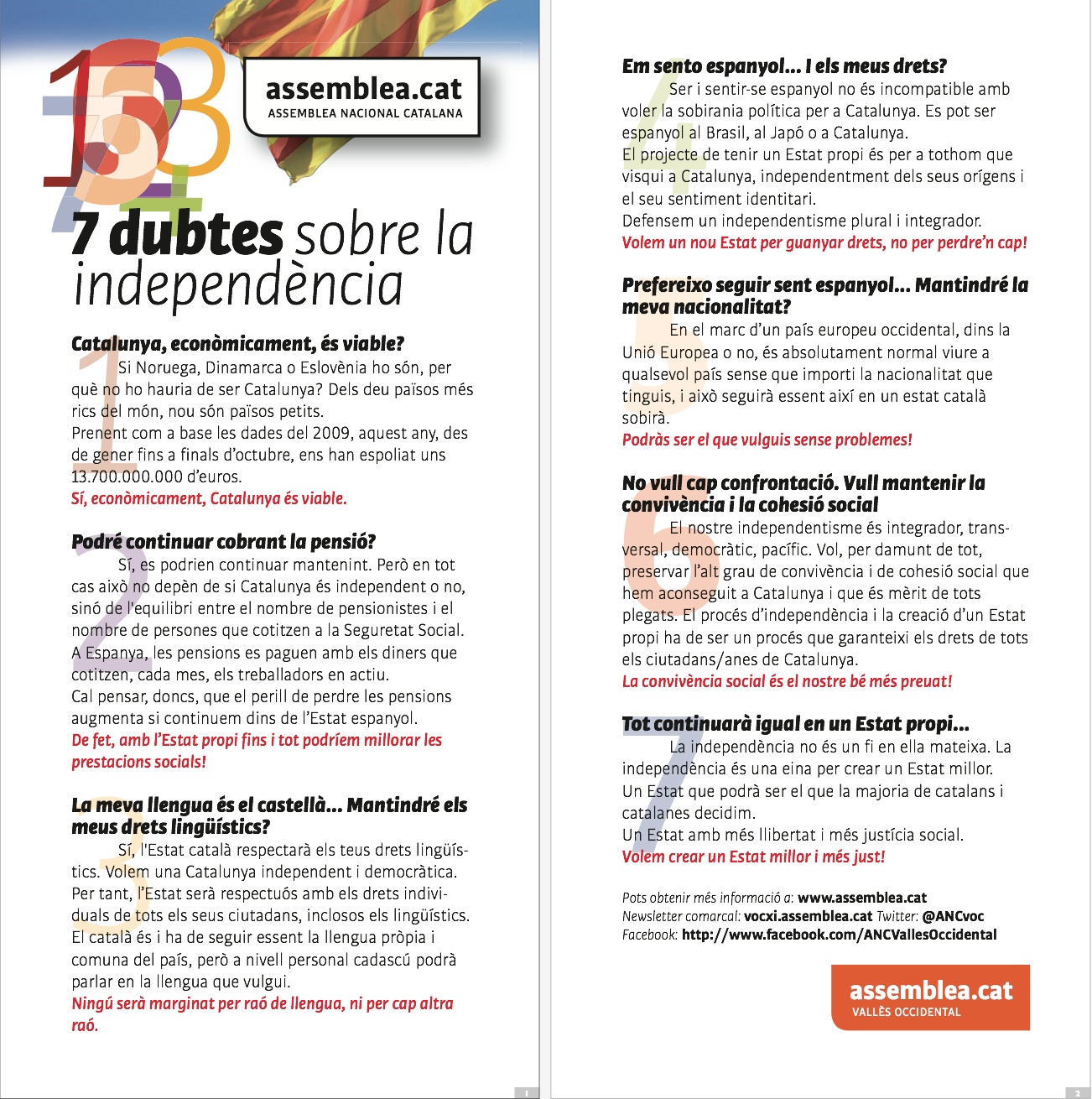
Més de 40.000 fulls repartits pel Vallès Occidental treuran els dubtes sobre la independència
L’Assemblea Nacional Catalana al Vallès Occidental repartirà les pròximes setmanes més de 40.000 fulls que donen resposta als dubtes que més sovint es plantegen sobre la independència.
En un context on hi ha qui vol que les mentides i les amenaces estenguin la por per Catalunya, les territorials del Vallès Occidental han fet un tiratge massiu d’un full que vol donar arguments a favor de la independència. Tot i que hi ha diverses territorial que ja han fet el seu propi full amb continguts similars, aquesta és la vegada que se’n farà una distribució més massiva a tota la comarca.
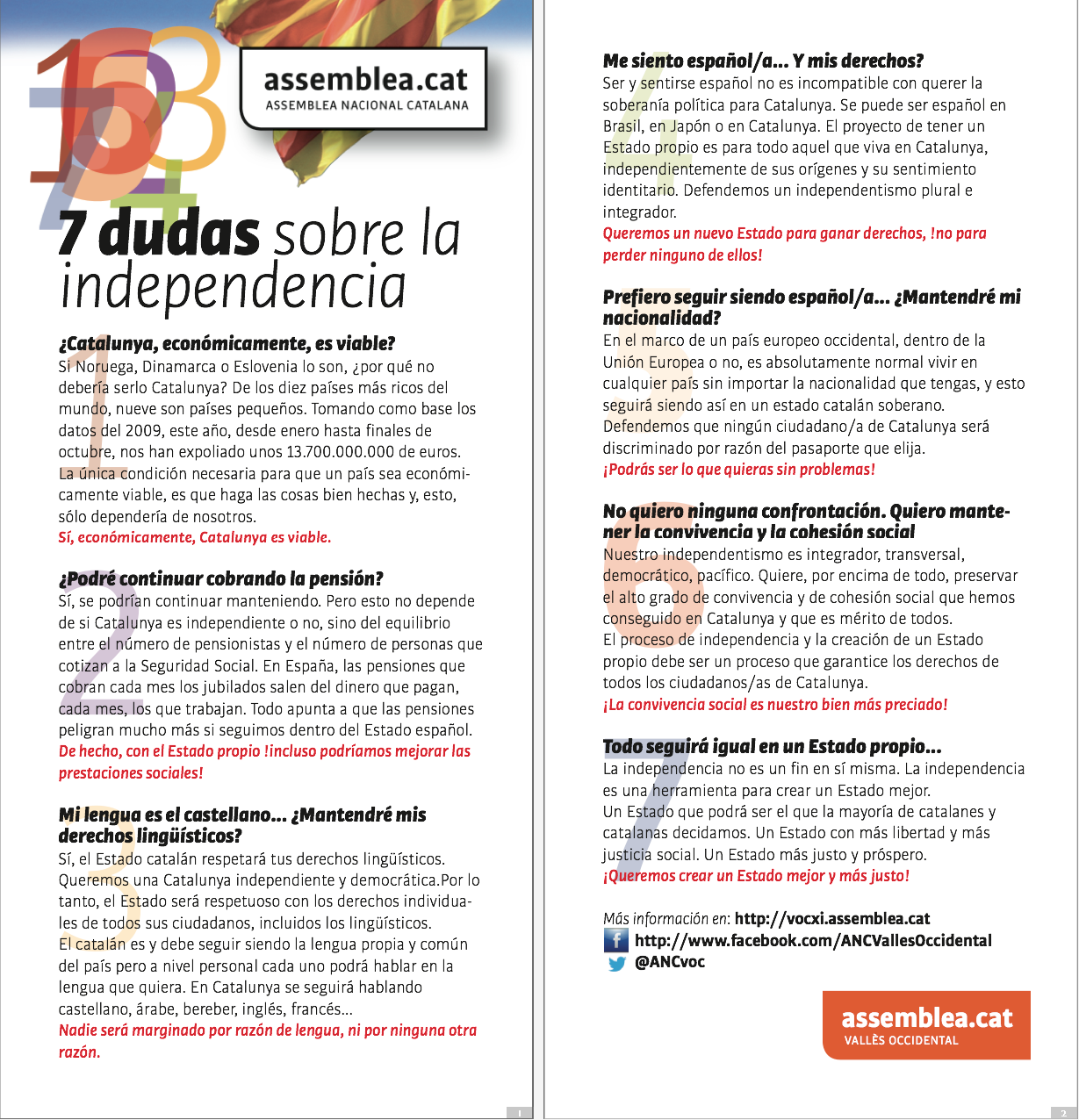
Se n’ha fet també una edició en castellà pernsant en els nuclis de població que no entenen el català.
En podeu fer també una distribució a través de la xarxa.
 Assemblea Nacional Catalana - VALLÈS OCCIDENTAL