“Un rei cop per cop” de Patricia Sverlo

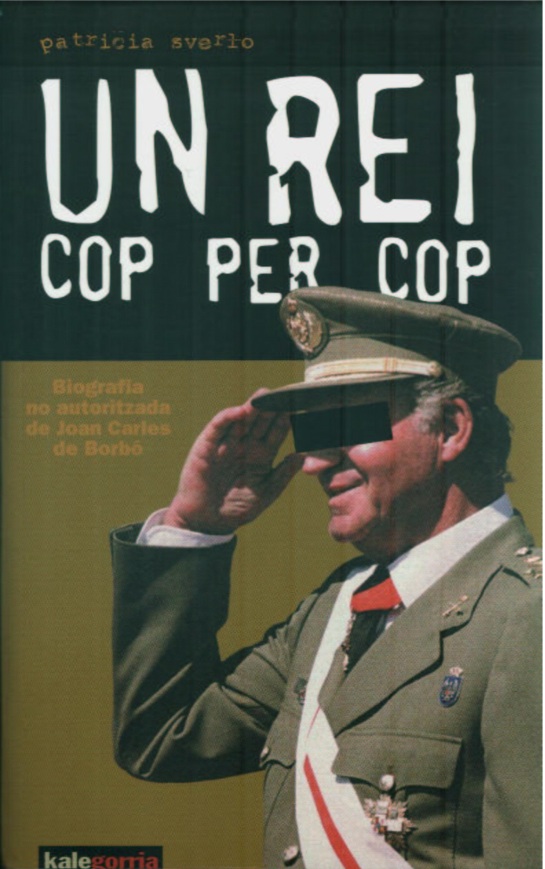
Avui fa 32 anys del cop d’estat de Tejero, Milans, Armada i molts altres. Enmig del descrèdit actual de la monarquia espanyola i del seu paper en afers de corrupció pot ser un bon moment per veure que la cosa ve de lluny. En concret, el paper del rei el 23F encara està sota una espessa cortina que amaga els detalls de la seva implicació.

El 2001 es va publicar en castellà la biografia no autoritzada  “Un rei cop per cop” per l’editorial “Kale gorria” i l’autor va signar amb el pseudònim Patricia Sverlo. En aquell moment només va circular en entorns molt clarament antimonàrquics i l’edició impresa no es va reeditar. També va sortir la traducció al català. Actualment circula obertament per la xarxa.

Una relectura pot fer-nos adonar que molts dels afers que surten avui a la llum fa 12 anys ja se sabien però un pacte de silenci els mantenia a l’ombra.

Un rei cop per cop PDF

Un rei cop a cop

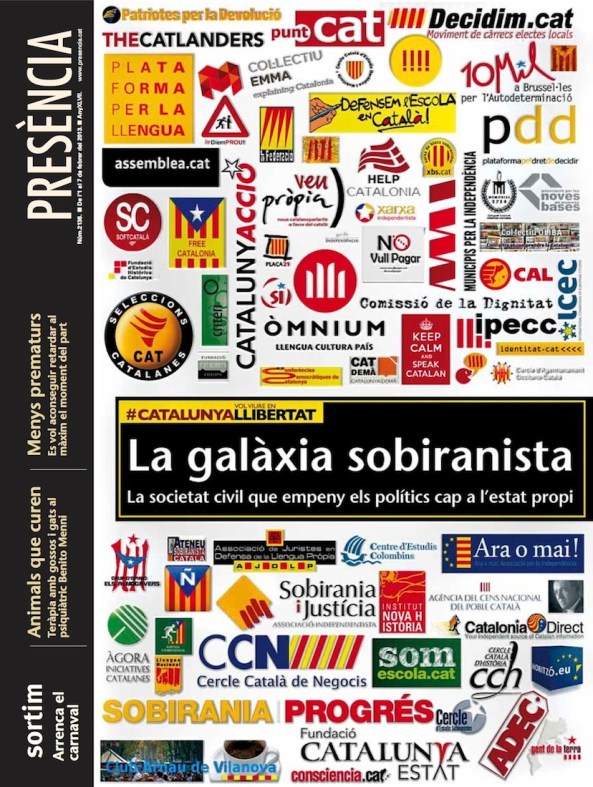
La “Galàxia sobiranista”, monogràfic de “Presència”

La revista Presència ha tret un dossier titulat “Galàxia sobiranista” sobre el moviment associatiu que empeny cap a la independència.

Galàxia sobiranista PDF

Presència La galàxia sobiranista

Repercussió internacional de la Declaració de Soberania

informació de Vilaweb

CNN: Catalan parliament declaration pushes self-determination

Associated Press (la principal agència de notícies del món): Catalonia declares itself a sovereign entity

Foreign Policy (publicació diplomàtica especialitzada): Catalonia moves closer to independence referendum

The Guardian: Catalan parliament paves way for referendum on independence

The Washington Post: Spain’s Catalonia Parliament passes symbolic declaration of sovereignty, referendum expected

L’Express: Catalogne: renaissance d’une nation

RTBF.be (televisió belga en francès): Le Parlement catalan fait un pas de plus vers l’indépendance

La Nación (un dels principals diaris argentins): El Parlamento de Cataluña aprueba iniciar un proceso de autodeterminación

Excelsior (diari de Mèxic): Aprueba Cataluña declaración de soberanía; abre vía a independencia

ANSA (agència nacional de notícies italiana): Spagna: Catalogna prepara ‘nuovo stato nell’UE’

Der Spiegel: Kataloniens Parlament will Abspaltung vorantreiben

N-TV (televisió alemanya): Katalanen unternehmen ersten Schritt zu Unabhängigkeitsreferendum

Tiscal (principal servei online a Itàlia): Catalogna, Parlamento adotta dichiarazione autodeterminazione

Le Devoir (diari sobiranista del Quebec): Indépendance – La Catalogne fait un pas de plus vers un référendum

Diario de Noticias (principal diari de Lisboa): Parlamento da Catalunha aprova declaração de soberania

Publico (diari portuguès d’esquerra): Parlamento da Catalunha aprova uma declaração sobre a soberania

Berria: Kataluniako Legebiltzarrak burujabetzaren aldeko adierazpena onartu du

The Star (Malàisia): Catalan lawmakers pass resolution on sovereignty

Europe Magazine: Catalan parliament approves referendum on independence

Global Post: Catalan lawmakers pass resolution on sovereignty

El Mundo: El Parlament aprueba la declaración que impulsa el ‘derecho a decidir’ de Cataluña

El País: El Parlament aprueba por amplia mayoría la declaración soberanista

B92 (ràdio progressista sèrbia) Catalan parliament declares ‘sovereign entity

Independenza (diari sard): CATALOGNA: APPROVATA LA DICHIARAZIONE DI SOVRANITA’

En Son Haber (diari turc): Katalanlar’dan bağımsızlığa bir adım daha

Agencia Venezolana de Noticias: Parlamento de Cataluña aprueba proclama de soberanía de su región

Agencia Prensa Latina (Cuba): Región española de Cataluña aprueba declaración de soberanía

Drawing a Road Map for Catalonia

El Col·lectiu Emma ha fet aquest escrit en 10 idiomes per donar a conèixer el moment que viu Catalunya al món.

emma


A new regional government is now in place in Catalonia. Like many other administrations in Europe these days, it will have a hard time providing an adequate level of services to its citizens while it strives to help a battered economy get back on the right track. With an added handicap: it has to deal with a Spanish government that won’t make either of these tasks any easier. Never mind that Catalonia is a productive society and a vital contributor to the State’s finances. The central government retains control over the public purse and deals out or withholds funds mainly as a way of furthering its own political agenda. And every message coming from Madrid shows that it plans to make full use of this leverage to curb the Catalans’ freedom of action, combining the financial stranglehold with relentless attacks on their language and culture, including the educational system, in an effort to erase all signs of their collective personality.

In these circumstances, it is not surprising that a substantial majority of Catalans should at least doubt the convenience of remaining a Spanish province. This was made clear by the results of the November 25 election, in which holding a popular referendum on independence was the winning coalition’s central promise. As of today, the idea has the support of almost two-thirds of Parliament, confirming what earlier opinion polls had been indicating: regardless of their eventual choice, around 80 per cent of Catalans agree to be consulted in a public vote on the option of disengaging themselves from the political entity to which they now belong.

The last election provided some clues about the Catalans’ state of mind, but in order to find out exactly how many have given up on Spain, there’s no alternative to asking them a straightforward question in an official ballot. This appears to be the sensible way to go: it’s consistent with the views expressed by several international experts and it’s also the line taken in the parallel process that is under way in Scotland, which has been endorsed by the UK Parliament and government.

Over in Spain, however, everyone is steadfast in rejecting this possibility. In a rare display of accord, virtually all political groups and most of the public opinion manufactured in Madrid are united in denying Catalans the right to speak on the matter. Of course, the Spanish establishment simply dreads that if the people are allowed to pronounce themselves there’s a good chance that they will go for separation. But there’s a more fundamental reason that goes beyond the fear of losing. Historically, and down to the present day, Spain has always refused to acknowledge the fact that Catalans are a people with a distinct national identity and that, as such, they are the subject of collective rights. Admitting that they can be consulted in an official referendum would imply a recognition of these rights.

For lack of a better argument, the 1978 constitution is raised as a shield to rebuff the Catalans’ claims or brandished as a weapon to threaten them with if they’d choose to overstep its narrowly-defined limits. Despite its questionable origins under the shadow of a forty-year dictatorship, this text is treated as sacred scripture by the defenders of the Spanish faith –once they’ve given it the spin that best suits their interests. This irrational posture can’t be kept up forever. The world knows that no law, no matter how exalted its title, can be invoked to thwart the will of a people. And everyone in Spain is aware that in present-day Europe an act of democratic expression can’t be prevented on a legal technicality, and even less by the threat or use of force.

***

Continua llegint

Conferència de Martí Anglada “Les relacions internacionals de Catalunya”

El periodista Martí Anglada ha estat corresponsal de TV3 a Brussel·les, Berlín i als Estats Units i corresponsal a l’Orient Mitjà, Itàlia i al Regne Unit per La Vanguardia. Té una llarga experiència com a comentarista de política internacional i va ser l’encarregat de fer una conferència a Bellaterra el dijous 15 de novembre, organitzada per Bellaterra per la Independència i centrada en observacions personals al llarg de la seva carrera periodística.
En Martí Anglada considera que Catalunya ha de tenir relacions internacionals sempre i en tot moment. De fet, la base de les relacions internacionals és tenir amics. I en els moments actuals si no hi ha amics és difícil la independència. Comenta que no n’hi ha prou en que Catalunya sigui un poble democràtic, pacífic i disposi de majories suficients; a més a més ha de tenir amics. Posa l’exemple del poble kurd que tot i tenir complir els requisits no disposa d’amics internacionals que l’avalin com a nou estat.

Us oferim un resum de la conferència.

Transcripció conferència Relacions Internacionals Catalunya PDF

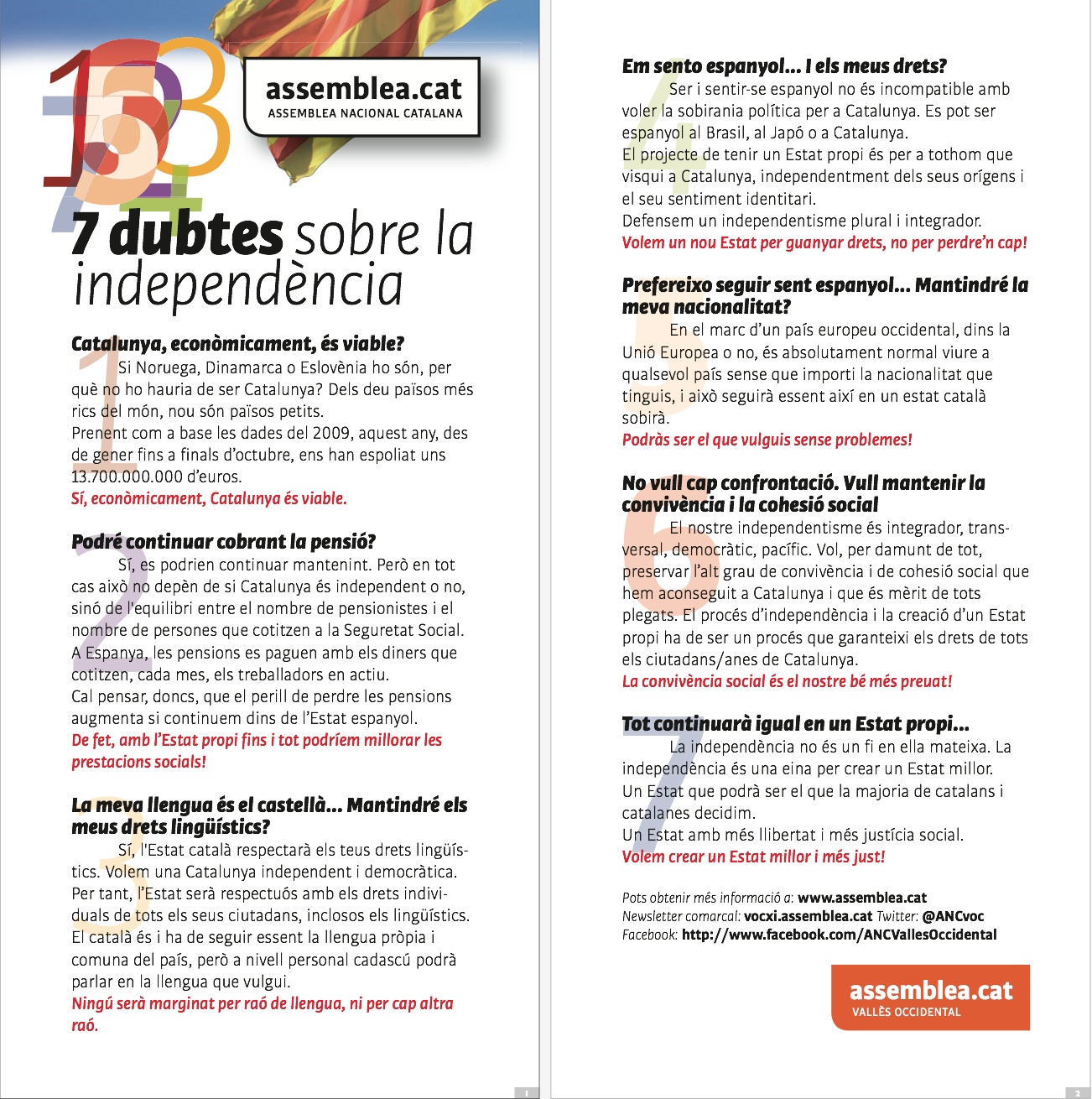
Més de 40.000 fulls repartits pel Vallès Occidental treuran els dubtes sobre la independència

L’Assemblea Nacional Catalana al Vallès Occidental repartirà les pròximes setmanes més de 40.000 fulls que donen resposta als dubtes que més sovint es plantegen sobre la independència.

En un context on hi ha qui vol que les mentides i les amenaces estenguin la por per Catalunya, les territorials del Vallès Occidental han fet un tiratge massiu d’un full que vol donar arguments a favor de la independència. Tot i que hi ha diverses territorial que ja han fet el seu propi full amb continguts similars, aquesta és la vegada que se’n farà una distribució més massiva a tota la comarca.

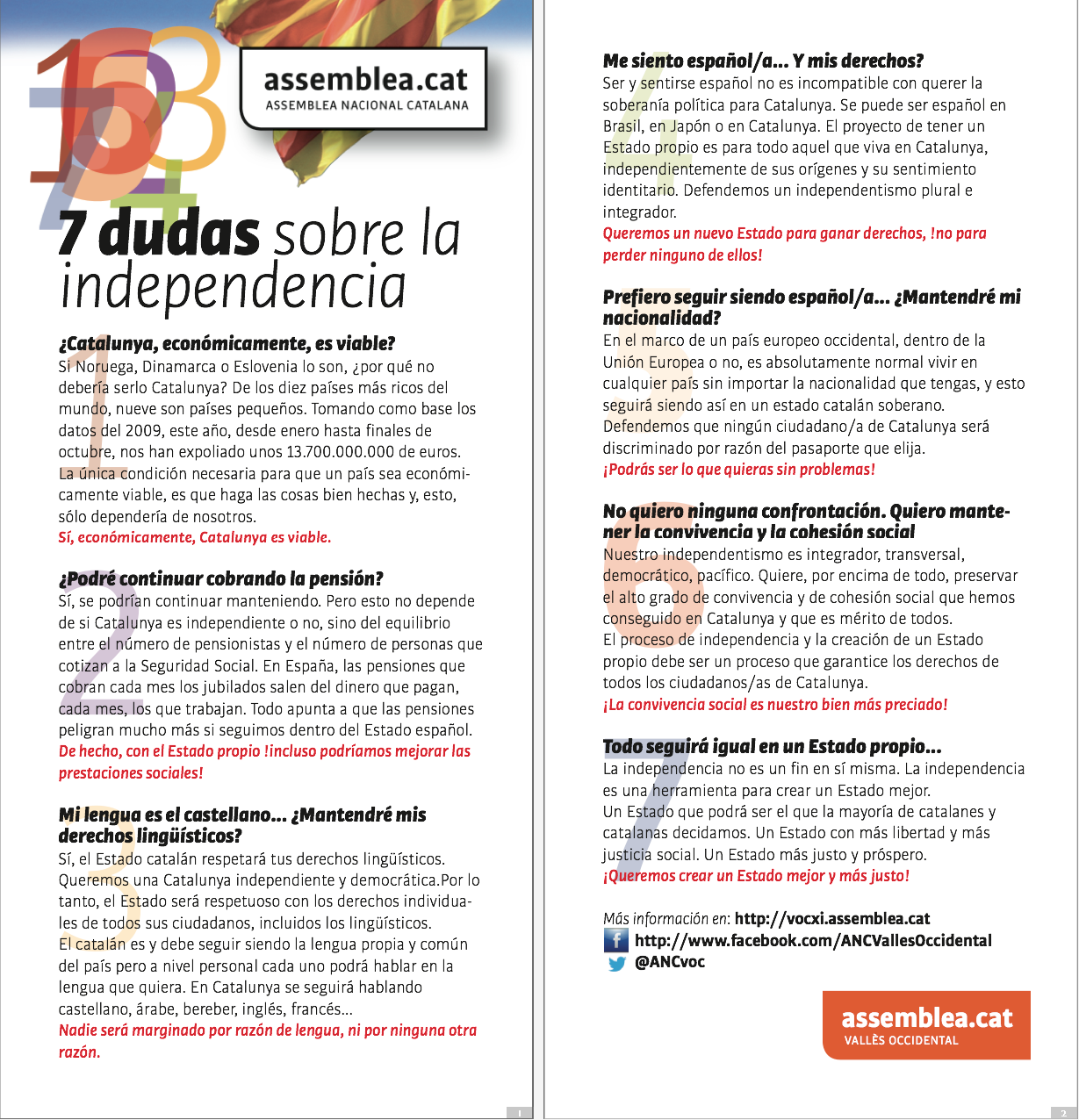
Se n’ha fet també una edició en castellà pernsant en els nuclis de població que no entenen el català.

En podeu fer també una distribució a través de la xarxa.

What the elections in Catalonia are really about

El Col·lectiu Emma ha preparat un text explicatiu en diversos idiomes sobre les eleccions del proper 25 de novembre. Pot ser útil difondre’l entre les persones d’arreu del món que s’interessin pel procés català.

La nota, original en anglès ha estat traduïda a l’àrab, alemany, castellà, català, esperanto, francès, neerlandès, indonesi, italià, portuguès i rus.

The reasons behind the November 25 election and its significance for Catalonia and beyond

Catalans are called to the polls on November 25 to choose a new regional government, but this election is not just a local event. A lot will hang on its outcome, and not only for Catalonia. Whatever Catalans decide may have far-reaching consequences for the future configuration of the Spanish state, or even its continuity. And there could also be significant ramifications for the European project.

International media have been following events in Catalonia with growing interest, especially since the pro-independence rally of last September 11. On that day 1.5 million people marched in Barcelona in a show of national dignity and civic responsibility –not a single incident was reported and not a single pane of glass was broken– and the world suddenly became aware of a conflict that is not characterized by violence or terrorism but driven by the quiet strength of an old nation.

***

Independence had not always been the preferred political option in Catalonia. At the end of General Franco’s dictatorship in the mid-nineteen seventies, most Catalans were hoping they could fit in the new order that was being installed in Spain. Since then, they haven’t stopped contributing to the country’s prosperity and stability. At the same time, perhaps against their better judgment, they have spent a lot of energy looking for ways to have their national identity recognized without breaking away from the Spanish framework.

One such attempt was the proposed revision of the self-rule charter, the Estatut, a wearing process started by several Catalan political parties as far back as 2005. After Spain rejected all the essential elements of that proposal in 2010, many Catalans simply despaired about ever being able reach a sensible compromise with the state. And yet, in the summer of 2012, when the wish to part ways with Spain was already becoming widespread, the Catalan leadership chose nevertheless to try one last effort and came up with the blueprint for a new “fiscal pact”. This was meant to correct, at least to some extent, the unsustainable imbalance between Catalonia’s financial contribution to the central government and the meager resources it gets in return. Only a few days after the September 11 demonstration, Artur Mas, the head of the Catalan government, brought his plan to Madrid, where Spanish President Mariano Rajoy turned it down in no uncertain terms, leaving no room for negotiation and without even the semblance of a justification. These two events in the same week led Mr. Mas to change his approach. He decided to call an early election, giving the people a chance to ratify at the ballot box what had been so clearly expressed on the streets of Barcelona.

***

Quite surprisingly in a European election these days, the central issue on November 25 won’t be the economy, although economic issues will definitely be part of the equation. Catalonia is a productive and viable society, but when it comes to managing public finances there is very little that the Catalan administration can do with the insufficient instruments at its disposal and as long as the central government retains final control over the Catalans’ tax money. Under the present fiscal arrangement, investments will only keep diminishing, infrastructures that are already strained will keep crumbling and essential services in health, education and social welfare will remain in jeopardy.

Still, these very real economic grievances should be placed in the context of a more general discontent with the evolution of Spanish political life that has been simmering for many years. Just as they have concluded that their economic viability cannot be guaranteed in the present political setup, Catalans feel they have no future as a people as long as they remain constrained by a nonperforming entity that is sapping much of their strength. What’s more, although they are sustaining Spain’s well-being with their work and their taxes, they are systematically branded as self-serving and disloyal and made to suffer constant attacks against their culture and their language in the name of superior Spanish values.

This tendency has intensified in recent times. Ever since coming to power, the present government has been striving to reimpose an impossible uniformity. Assimilation policies that were thought to be a thing of the dictatorial past are coming back with a vengeance, with government ministers and ruling-party leaders openly stating the need to “hispanicize” Catalan schoolchildren and to impress upon them the glories of Spain’s “three-thousand-year-old [sic] history”. This amounts to declaring that the collective identity of Catalans has no place in the ruling party’s monolithic design for Spain.

Catalans are simply tired of seeing that Spain hasn’t budged one bit in its denial of the country’s plurinational character and that it’s been repeatedly slamming every possible door in the face of every Catalan proposal towards its recognition. So for them it’s really about finding a way to survive as a nation even if it means starting on a path that could lead to separation from the state. This is why Mr. Mas will be seeking in this election a clear mandate to call in a very near future a referendum in which Catalans will be asked if they wish to continue as a Spanish region or to become a new state in Europe.

***

The international media have been devoting a lot of attention to this issue in the last few weeks, and many foreign observers are making a serious effort to understand the Catalan point of view, to find out the reasons behind this conflict and to explain it to the world in an unprejudiced way.

Over in Madrid, however, opinion-makers in the national media keep misreading and misrepresenting the Catalan situation. After their initial bafflement in the wake of the September 11 demonstration –which proves how far removed they are from the reality on the ground– the Spanish political forces –including most of the opposition as much as the ruling party– have taken an adversarial stance. Beyond generic appeals to the responsibility of Catalan leaders, the government’s official position has been squarely to deny the Catalan people the right to express their opinion alleging that a referendum would be illegal under the Spanish constitution.

No practical suggestions have been forthcoming from other quarters, either. Very few in Spain have publicly supported the Catalans’ right to decide or denounced the government’s undemocratic attitude. Many have kept a guilty silence. Others have voiced the usual token declarations of their high regard for the Catalan people and various platitudes about the virtues of unity and solidarity, while essentially denying any merit to the Catalan position.

So, each in their own way, the government, the opposition and a good share of Spanish society are all refusing to acknowledge that there might be a point to the Catalans’ claims and thus precluding any possibility of engaging in a meaningful dialogue. And it is precisely this long-standing –and not altogether disinterested– blindness to the reality of Catalonia that could lead to its separation from Spain.

***

The first leg of this contest will be played on November 25. The predictable landslide by the variegated parties that support holding a referendum on independence is likely to set in motion a process that could lead to the creation of a new state in Europe. It is to be expected that the Spanish side will do everything in its power to derail this process. Europe and the world should be watching very closely everyone’s moves, because they too have a stake in this matter. Ultimately, it is in everyone’s interest to make sure that whatever Catalans decide in a democratic, responsible and peaceful way will be respected by all. Then all would benefit from the contribution that a free Catalonia can make to the world.

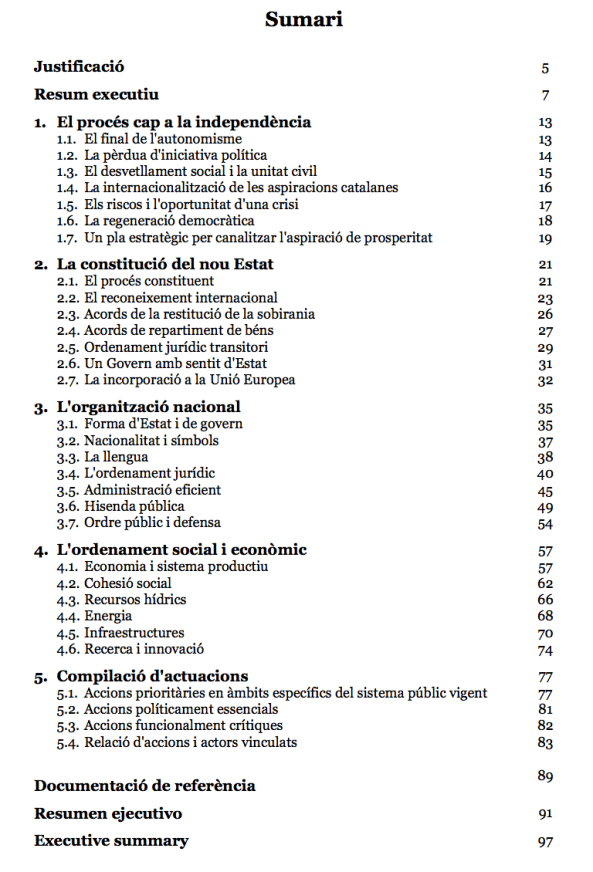
Estatuir, guia per construir l’estat català

El sociòleg Salvador Cardús, el biòleg Ramon Folch i l’enginyer Sergi Rovira són els autors d’un treball de consulta i recerca sobre quin seria l’escenari d’una Catalunya un cop constituïda en estat independent. El treball destaca els aspectes en què hi ha més per fer i els models a seguir que no tenen perquè ser copiats dels espanyols.

7 dubtes sobre la independència. Díptic de l’Assemblea

L’Assemblea Nacional Catalana ha elaborat un díptic amb 7 dubtes sobre la independència molt freqüents.

N’ha fet una edició en castellà pensant en la població que no ha estat escolaritzada en català.

(documents actualitzats el 4 de novembre)

7 dubtes català PDF

7 dubtes castellà PDF

Informació relacionada: Repartiment de fulls dels “7 dubtes” al Vallès Occidental.

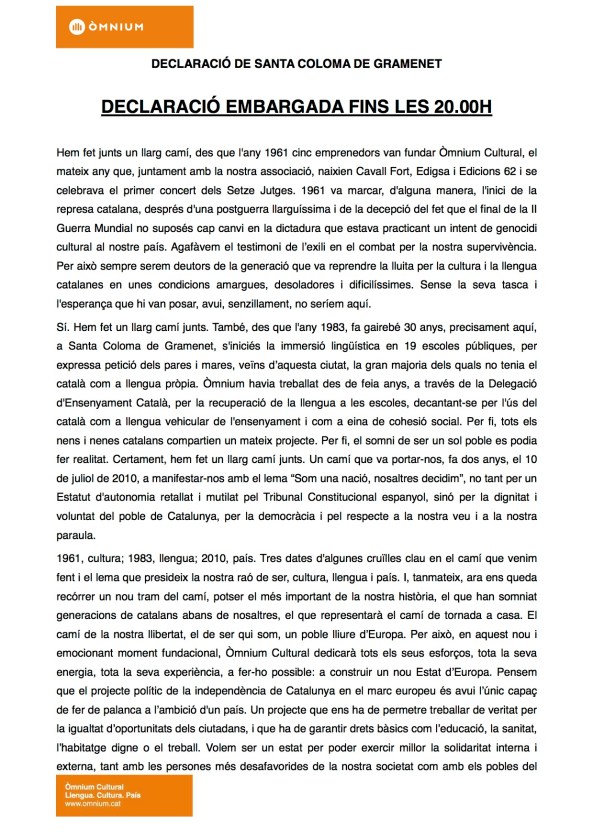
Declaració d’Òmnium Cultural feta a Santa Coloma de Gramenet el 29 d’octubre

Text i vídeo de l’acte de presentació de la “Declaració de Santa Coloma de Gramenet” feta per Òmnium Cultural a Santa Coloma de Gramenet.

Declaració Òmnium PDF


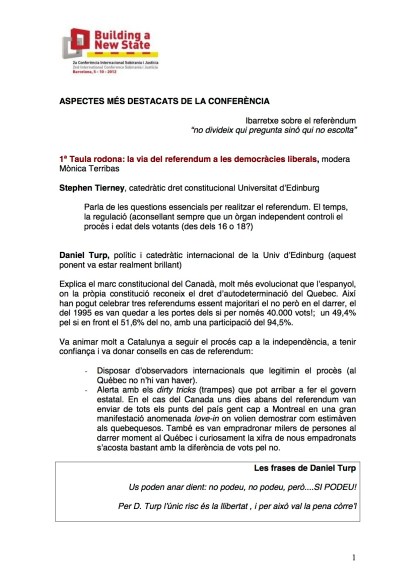
Conclusions de la Conferència “Building a new state”

L’ANC va col·laborar amb Sobirania i Justícia en la 2a Conferència Internacional Building a New State 2012 que es va celebrar a Barcelona el passat 5 d’octubre.

Us adjuntem un resum d’aquesta conferència que ens han fet arribar des de Sobirania i Justícia i que creiem que pot ser d’interès per a tothom.

Resum Building a new state PDF

Més informació a la web de Sobirania i Justícia

Preguntes i respostes sobre la independència

Preguntes i respostes” és aquest llibre de 70 pàgines que té totes les preguntes més comuns i dóna les respostes més clarificadores sobre el procés d’independència.

L’ha fet la Fundació Catalunya Estat 

Preguntes i respostes

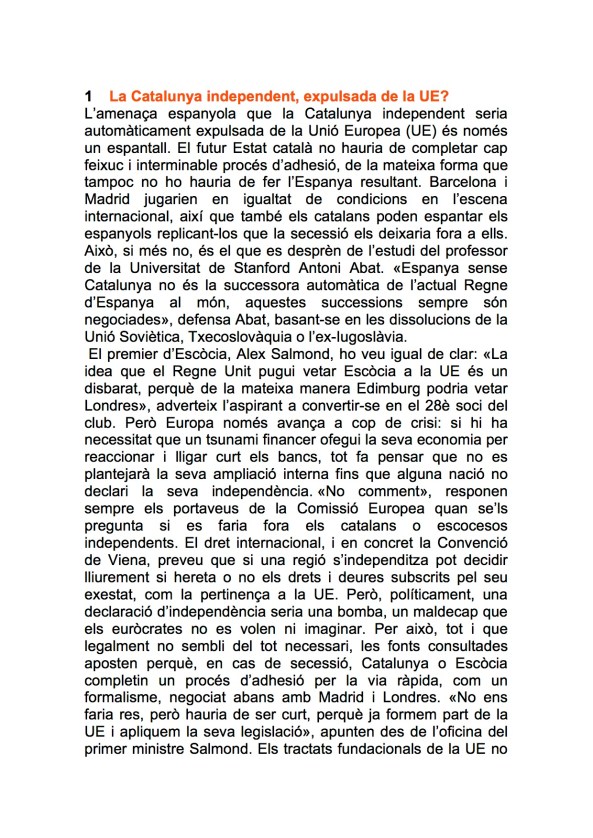
8 preguntes amb resposta sobre la independència de Catalunya

Document elaborat per Òmnium Cultural

Vuit preguntes 

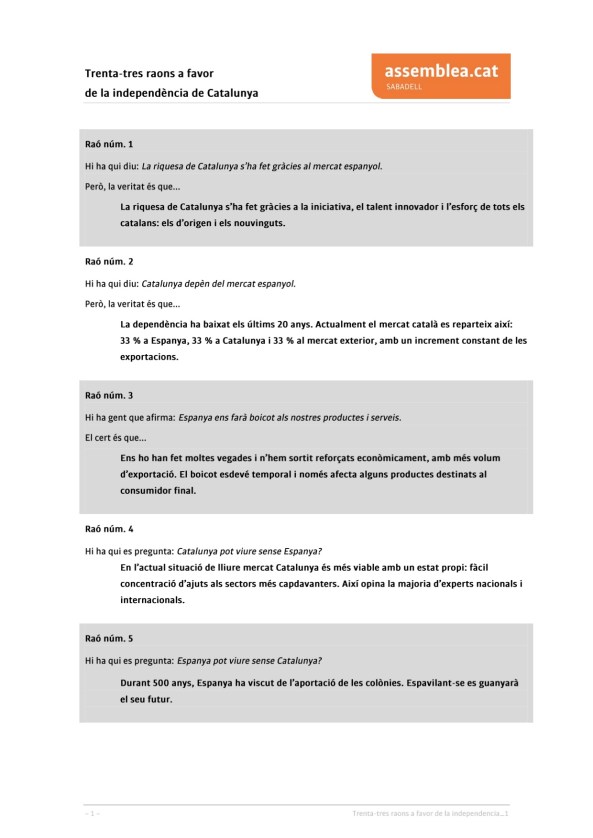
33 raons a favor de la Independència de Catalunya

Sabadell per la independència ha fet un document amb 33 respostes a qüestions sobre la independència de Catalunya.

Trenta-tres raons a favor de la independència

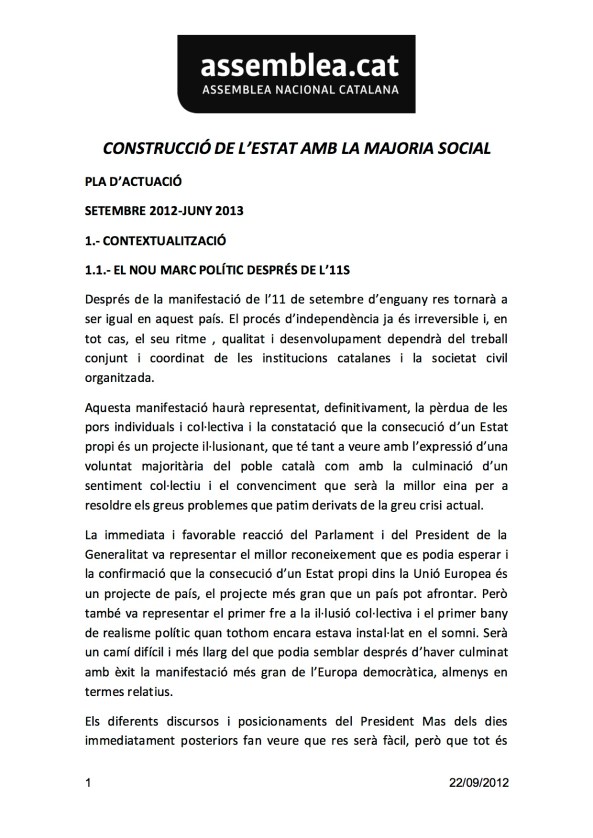
Nova etapa de l’ANC: “Contrucció de l’Estat amb la majoria social”

Benvolguts/des,

Ahir dissabte, 22 de setembre, a Amposta, va tenir lloc el plenari del Secretariat Nacional. Entre altres punts de l’ordre del dia, es va debatre i aprovar la primera part del pla d’acció de l’ANC per a l’etapa de setembre de 2012 a juny de 2013. El pla l’hem titulat “CONSTRUCCIÓ DE L’ESTAT AMB LA MAJORIA SOCIAL”.

Us adjunto el primer dels documents aprovats. Es tracta del que fa referència a la contextualització dins del nou marc polítc de després de l’11 de setembre. També, hem definit l’objectiu general i els objectius estratègics per a aquesta nova etapa que ja hem engegat.

El plenari del Secretariat continuarà el proper dissabte 6 d’octubre. Caldrà definir quins són els objectius específics i, sobretot, les mesures i/o accions a emprendre en aquesta nova etapa. Intentarem que sigui un document àgil i entenedor; que especifiqui de manera clara i senzilla el QUÈ, el COM i la FINALITAT de cadascuna de les accions i/o mesures.

Som conscients que la majoria de vosaltres esteu esperant una resposta per part del Secretariat Nacional a la pregunta de moda: I ARA QUÈ? Avui, comencem a donar-vos les primeres respostes que acabarem de completar el  proper dissabte.

S’apropen moments durs en què caldrà tenir coratge i una gran dosi de resistència. Ara bé, també són moments històrics, moments dels quals, sens dubte, ens sentirem orgullosos i feliços per poder haver-hi participat com a un dels actors principals.

Endavant i bona feina!

Jaume Marfany
Secretariat Nacional ANC
Comunicació i relacions internes

Document Construcció de l’Estat amb la majoria social