“No tinc por” sèrie de vídeos contra les amenaces

Vilaweb a produit aquesta sèrie de vídeos per treure’ns la por del damunt i seguir endavant

“Vull una resposta”, programa de TV d’informació sobre la independència

L’Assemblea Nacional Catalana ha començat un programa de televisió, d’emissió setmanal, amb el títol “Vull una resposta“.
Els 13 programes previstos s’emetran a tot el país a través de la Xarxa de Televisions Digitals Independents de Proximitat (XTDIP).


Clicant en aquest enllaç trobareu tots els programes


Carme Forcadell

R+D+I

Les balances fiscals

Signa un vot per la independència

L’endemà de la independència

El model sanitari català

Sobirania fiscal

Com pot Catalunya arribar a ser un estat independent?

Finançament

Ecologia i estat propi

Educació i estat propi

La teoria del control i la independència

L’evolució de l’ANC

La història, un argument a favor

La immigració i el nou estat

El vot unionista i sobiranista a les eleccions del 25N

Regeneració democràtica

Joventut

Economia per a la independència

Moviment obrer

Com arribarem a la independència?

Nacionalitat

Esport català i el Barça

Federalisme?

Valoració dels resultats de les eleccions del 25N

La Unió Europea

La llengua

Les pensions

What the elections in Catalonia are really about

El Col·lectiu Emma ha preparat un text explicatiu en diversos idiomes sobre les eleccions del proper 25 de novembre. Pot ser útil difondre’l entre les persones d’arreu del món que s’interessin pel procés català.

La nota, original en anglès ha estat traduïda a l’àrab, alemany, castellà, català, esperanto, francès, neerlandès, indonesi, italià, portuguès i rus.

The reasons behind the November 25 election and its significance for Catalonia and beyond

Catalans are called to the polls on November 25 to choose a new regional government, but this election is not just a local event. A lot will hang on its outcome, and not only for Catalonia. Whatever Catalans decide may have far-reaching consequences for the future configuration of the Spanish state, or even its continuity. And there could also be significant ramifications for the European project.

International media have been following events in Catalonia with growing interest, especially since the pro-independence rally of last September 11. On that day 1.5 million people marched in Barcelona in a show of national dignity and civic responsibility –not a single incident was reported and not a single pane of glass was broken– and the world suddenly became aware of a conflict that is not characterized by violence or terrorism but driven by the quiet strength of an old nation.

***

Independence had not always been the preferred political option in Catalonia. At the end of General Franco’s dictatorship in the mid-nineteen seventies, most Catalans were hoping they could fit in the new order that was being installed in Spain. Since then, they haven’t stopped contributing to the country’s prosperity and stability. At the same time, perhaps against their better judgment, they have spent a lot of energy looking for ways to have their national identity recognized without breaking away from the Spanish framework.

One such attempt was the proposed revision of the self-rule charter, the Estatut, a wearing process started by several Catalan political parties as far back as 2005. After Spain rejected all the essential elements of that proposal in 2010, many Catalans simply despaired about ever being able reach a sensible compromise with the state. And yet, in the summer of 2012, when the wish to part ways with Spain was already becoming widespread, the Catalan leadership chose nevertheless to try one last effort and came up with the blueprint for a new “fiscal pact”. This was meant to correct, at least to some extent, the unsustainable imbalance between Catalonia’s financial contribution to the central government and the meager resources it gets in return. Only a few days after the September 11 demonstration, Artur Mas, the head of the Catalan government, brought his plan to Madrid, where Spanish President Mariano Rajoy turned it down in no uncertain terms, leaving no room for negotiation and without even the semblance of a justification. These two events in the same week led Mr. Mas to change his approach. He decided to call an early election, giving the people a chance to ratify at the ballot box what had been so clearly expressed on the streets of Barcelona.

***

Quite surprisingly in a European election these days, the central issue on November 25 won’t be the economy, although economic issues will definitely be part of the equation. Catalonia is a productive and viable society, but when it comes to managing public finances there is very little that the Catalan administration can do with the insufficient instruments at its disposal and as long as the central government retains final control over the Catalans’ tax money. Under the present fiscal arrangement, investments will only keep diminishing, infrastructures that are already strained will keep crumbling and essential services in health, education and social welfare will remain in jeopardy.

Still, these very real economic grievances should be placed in the context of a more general discontent with the evolution of Spanish political life that has been simmering for many years. Just as they have concluded that their economic viability cannot be guaranteed in the present political setup, Catalans feel they have no future as a people as long as they remain constrained by a nonperforming entity that is sapping much of their strength. What’s more, although they are sustaining Spain’s well-being with their work and their taxes, they are systematically branded as self-serving and disloyal and made to suffer constant attacks against their culture and their language in the name of superior Spanish values.

This tendency has intensified in recent times. Ever since coming to power, the present government has been striving to reimpose an impossible uniformity. Assimilation policies that were thought to be a thing of the dictatorial past are coming back with a vengeance, with government ministers and ruling-party leaders openly stating the need to “hispanicize” Catalan schoolchildren and to impress upon them the glories of Spain’s “three-thousand-year-old [sic] history”. This amounts to declaring that the collective identity of Catalans has no place in the ruling party’s monolithic design for Spain.

Catalans are simply tired of seeing that Spain hasn’t budged one bit in its denial of the country’s plurinational character and that it’s been repeatedly slamming every possible door in the face of every Catalan proposal towards its recognition. So for them it’s really about finding a way to survive as a nation even if it means starting on a path that could lead to separation from the state. This is why Mr. Mas will be seeking in this election a clear mandate to call in a very near future a referendum in which Catalans will be asked if they wish to continue as a Spanish region or to become a new state in Europe.

***

The international media have been devoting a lot of attention to this issue in the last few weeks, and many foreign observers are making a serious effort to understand the Catalan point of view, to find out the reasons behind this conflict and to explain it to the world in an unprejudiced way.

Over in Madrid, however, opinion-makers in the national media keep misreading and misrepresenting the Catalan situation. After their initial bafflement in the wake of the September 11 demonstration –which proves how far removed they are from the reality on the ground– the Spanish political forces –including most of the opposition as much as the ruling party– have taken an adversarial stance. Beyond generic appeals to the responsibility of Catalan leaders, the government’s official position has been squarely to deny the Catalan people the right to express their opinion alleging that a referendum would be illegal under the Spanish constitution.

No practical suggestions have been forthcoming from other quarters, either. Very few in Spain have publicly supported the Catalans’ right to decide or denounced the government’s undemocratic attitude. Many have kept a guilty silence. Others have voiced the usual token declarations of their high regard for the Catalan people and various platitudes about the virtues of unity and solidarity, while essentially denying any merit to the Catalan position.

So, each in their own way, the government, the opposition and a good share of Spanish society are all refusing to acknowledge that there might be a point to the Catalans’ claims and thus precluding any possibility of engaging in a meaningful dialogue. And it is precisely this long-standing –and not altogether disinterested– blindness to the reality of Catalonia that could lead to its separation from Spain.

***

The first leg of this contest will be played on November 25. The predictable landslide by the variegated parties that support holding a referendum on independence is likely to set in motion a process that could lead to the creation of a new state in Europe. It is to be expected that the Spanish side will do everything in its power to derail this process. Europe and the world should be watching very closely everyone’s moves, because they too have a stake in this matter. Ultimately, it is in everyone’s interest to make sure that whatever Catalans decide in a democratic, responsible and peaceful way will be respected by all. Then all would benefit from the contribution that a free Catalonia can make to the world.

“Cauen els murs” vídeo sobre les eleccions al Parlament de Catalunya del 25 de novembre

Estatuir, guia per construir l’estat català

El sociòleg Salvador Cardús, el biòleg Ramon Folch i l’enginyer Sergi Rovira són els autors d’un treball de consulta i recerca sobre quin seria l’escenari d’una Catalunya un cop constituïda en estat independent. El treball destaca els aspectes en què hi ha més per fer i els models a seguir que no tenen perquè ser copiats dels espanyols.

El 30 minuts de TV3 sobre la “independència pas a pas”

7 dubtes sobre la independència. Díptic de l’Assemblea

L’Assemblea Nacional Catalana ha elaborat un díptic amb 7 dubtes sobre la independència molt freqüents.

N’ha fet una edició en castellà pensant en la població que no ha estat escolaritzada en català.

(documents actualitzats el 4 de novembre)

7 dubtes català PDF

7 dubtes castellà PDF

Informació relacionada: Repartiment de fulls dels “7 dubtes” al Vallès Occidental.

Eleccions al Parlament de Catalunya 2012: com votar per correu i com votar des de fora l’estat espanyol

Informació de la web de la Generalitat

Vot per correu (des de l’estat espanyol)

Quin termini hi ha per sol·licitar-lo?

A partir de la data de convocatòria i fins al desè dia anterior a les eleccions, ambdós inclosos, poden sol·licitar el vot per correu de les persones electores que es trobin dins l’estat espanyol. Del 2 d’octubre al 15 de novembre.

Quins tràmits s’han de fer per demanar el vot per correu?

Us heu d’adreçar personalment a qualsevol oficina de Correus i, presentant l’original del DNI, fer una sol·licitud de certificat d’inscripció en el cens electoral. Només en cas de malaltia o incapacitat, acreditades mitjançant certificat mèdic, pot una persona diferent a l’interessada sol·licitar aquest certificat, i per a això ha de ser autoritzada per mitjà d’un document notarial o consular estès individualment.

A partir de quin dia es remet al domicili la documentació quan ja s’ha sol·licitat el vot per correu?

A partir del trenta-quatrè dia posterior a la convocatòria i abans del sisè dia anterior a la votació, la delegació provincial de l’Oficina del Cens Electoral corresponent, trametrà per correu certificat al domicili que hagueu assenyalat el certificat censal juntament amb les paperetes, el sobre de votació i un sobre adreçat al president de la mesa en la qual us correspon votar, a més d’un full explicatiu del procediment que s’ha de seguir. Del 5 de novembre al 18 de novembre.

L’acusament de recepció de la documentació anterior haurà de ser signat personalment per la persona interessada prèvia acreditació de la seva identitat. En cas de no trobar-se a l’adreça assenyalada en la sol·licitud del vot, se li comunicarà que ha d’anar personalment o a través de representació (en cas de malaltia o incapacitat certificada mèdicament) a l’oficina de Correus corresponent per a, prèvia acreditació, rebre la documentació per al vot per correu.

Quin termini tinc per trametre el vot per correu a la mesa?

Un cop escollida la papereta de vot i introduïda en el sobre de votació, l’heu de tancar i introduir, juntament amb el certificat d’inscripció en el cens, en el sobre adreçat al president de la mesa, el qual heu de remetre per correu certificat abans del tercer dia previ al de la celebració de les eleccions. Del 5 de novembre al 21 de novembre.

És necessari lliurar personalment el sobre de votació?

No, no és necessari que es lliuri personalment el sobre a l’oficina de Correus. Qualsevol altra persona pot fer aquest tràmit.

Tinc dret a un permís per demanar el vot per correu?

Sí, la Generalitat de Catalunya dicta la normativa que sigui procedent perquè les persones que vulguin sol·licitar el vot per correu comptin amb un permís, de fins a quatre hores lliures, per poder-lo sol·licitar.

Un cop sol·licitat el vot per correu, encara que no el trameti, puc votar presencialment a la mesa el dia de les eleccions? I si no he rebut la documentació, podré anar a votar personalment a la mesa?

Una vegada sol·licitat el vot per correu, ja no podeu votar personalment a la mesa electoral.

 
Continua llegint

By nani Posted in Eines Etiquetat

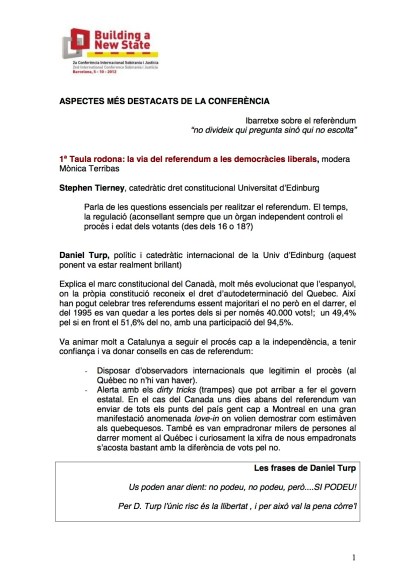
Conclusions de la Conferència “Building a new state”

L’ANC va col·laborar amb Sobirania i Justícia en la 2a Conferència Internacional Building a New State 2012 que es va celebrar a Barcelona el passat 5 d’octubre.

Us adjuntem un resum d’aquesta conferència que ens han fet arribar des de Sobirania i Justícia i que creiem que pot ser d’interès per a tothom.

Resum Building a new state PDF

Més informació a la web de Sobirania i Justícia

L’espoli fiscal explicat al món i per dur al telèfon

Vídeo de presentació per a l’App StopEspoli.
Amb Clara Ponsatí, Montserrat Guibernau, Joan B. Casas, Heribert Padrol, Núria Bosch, Elisenda Paluzie, Jordi Galí, Carles Boix, Guillem López Casasnovas i Andreu Mas-Colell.

Instal·la’t l’app per a l’iPhone feta per www.stopespoli.cat

Jonathan Tepper a “Singulars” parla de la política monetària i la viabilitat d’un estat català

L’analista econòmic Jonathan Tepper, col·laborador de mitjans com la BBC, CNBC i Bloomberg, va participar en el programa Singulars per tractar temes econòmics, mometaris i de viabilitat d’una Catalunya independent.

Vídeo

Carles Boix a “Singulars” explica el procés per arribar a fer l’estat català

El doctor en Ciències Polítiques i màster en Administració Pública per la Universitat Harvard i catedràtic a la Universitat de Princeton Carles Boix, ha estat  entrevistat al programa de TV3 ‘Singulars‘ (TVC), presentat per Jaume Barberà. El professor Boix explica el camí que podria fer Catalunya cap a l’estat propi, amb detalls dels aspectes econòmics i de política internacional.

Vídeo

Preguntes i respostes sobre la independència

Preguntes i respostes” és aquest llibre de 70 pàgines que té totes les preguntes més comuns i dóna les respostes més clarificadores sobre el procés d’independència.

L’ha fet la Fundació Catalunya Estat 

Preguntes i respostes

Impacte internacional de la campanya d’escrits demanant el cessament de Vidal-Quadras

El president del Parlament Europeu Martin Schulz ha contestat les peticions d’actuar contra Vidal-Quadras per les seves declaracions militaristes. Ho ha fet als europarlamentaris després de reconèixer haver rebut 40.000 escrits en 3 dies.

Aquesta és la contesta:

‘Honorables membres, estimats col·legues,

Gràcies per la vostra carta cridant la meva atenció per les recents declaracions fetes pel vice-president Alejo Vidal-Quadras.

Com sabeu, aquesta cambra està completament compromesa amb el principi de llibertat d’expressió, així com el respecte del dret de tots els ciutadans europeus de manifestar-se pacíficament.

En primer lloc, puc assegurar-los que les declaracions no van ser fetes per Vidal-Quadras en qualitat de vice-president del Parlament Europeu. Reflecteixen una opinió personal feta en un context polític nacional.

No obstant això, no em pertoca com a president del Parlament Europeu jutjar el contingut de les declaracions fetes per un membre ni prendre mesures disciplinàries. Pertoca als votants catalans valorar aquesta declaració.

Cordialment,

Martin Schulz’

______________________

Després de 4 dies de campanya feta a través d’un formulari a la web de l’Assemblea Nacional Catalana al Vallès Occidental hem aconseguit les següents dades:

  • 85.000 visites a la pàgina del formulari per enviar l’escrit
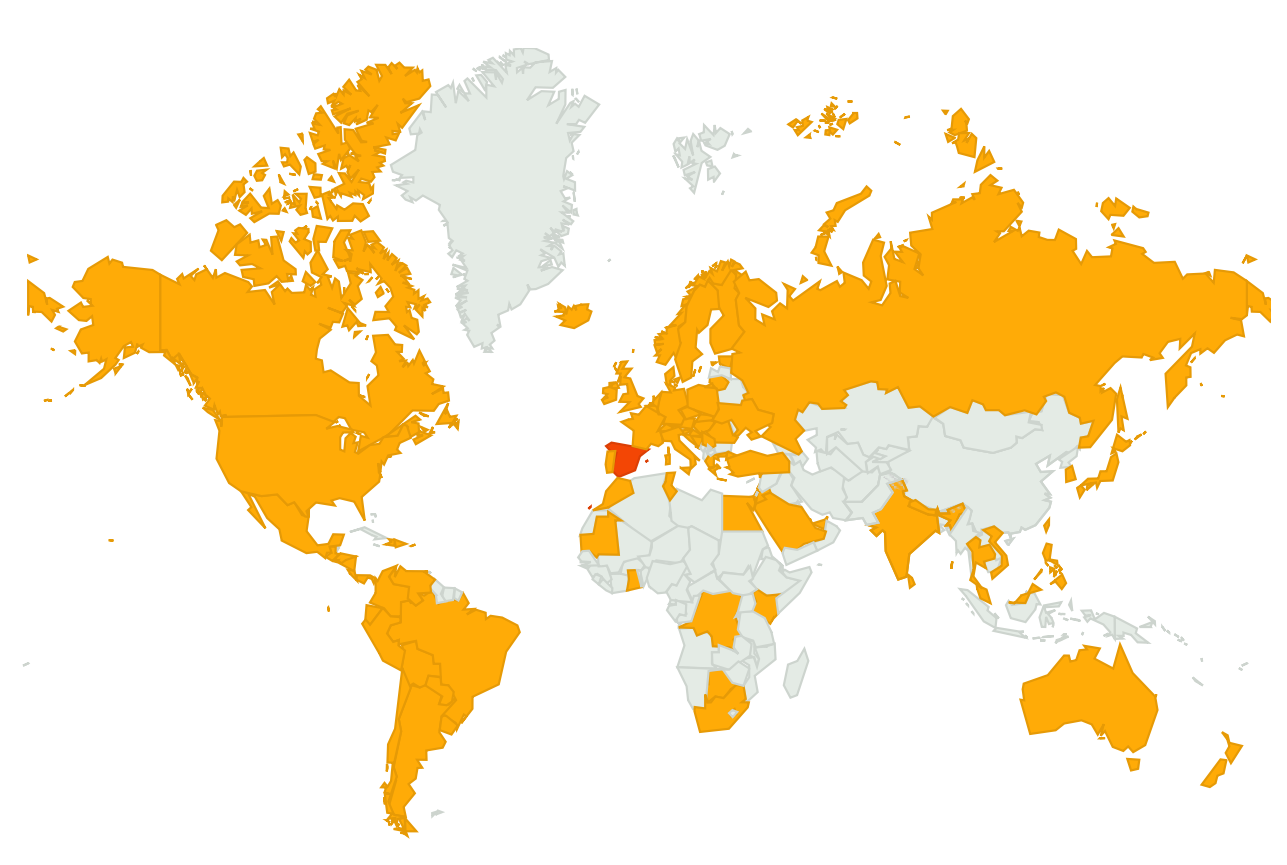
  • haver arribat fins a 90 països dels 5 continents
  • internacionalització de la protesta catalana contra les crides a la militarització del procés cap a l’estat propi de Catalunya

La xifra de correus enviats no és possible saber-la amb exactitud. El que es pot saber és el nombre de visites a la pàgina que ha tingut com a contingut fonamental l’enviament de l’escrit. La xifra estimada de 85.000 té un descompte ponderat pel nombre de visites a altres continguts.

Mapa dels països des d’on s’han fet entrades

Llista de països on ha arribat la campanya

Formulari per demanar el cessament de Vidal-Quadras al president del Parlament Europeu

El formulari per enviar una petició de cessament de Vidal-Quadras al president del Parlament Europeu l’hem tancat havent aconseguit 85.000 visites en 4 dies. És una resposta ràpida i massiva per donar a conèixer al president del Parlament Europeu Martin Schulz els plantejaments militaristes del seu vicepresident. Des d’ara l’ANC intentarà arribar per altres mitjans igualment eficaços als membres del Parlament.

Gràcies per haver participat!

Comproveu l’impacte que ha tingut la campanya: cliqueu aquí

El text que s’ha enviat al president del Parlament Europeu Martin Schulz  < president@europarl.europa.eu > és aquest:

Dear sir, 

As a Catalan and European, I want to express the great concern caused by the statements made today (28th September 2012) by Mr. Alejo Vidal-Quadras, member of the European Parliament.  He is against the Catalans’ right to decide their national future, asking for  a Spanish army-led action  against Catalonia, its citizens and its democratic institutions if we decide democratically to secede from Spain. 

As you can understand, Mr Alejo Vidal-Quadras’ statements are clearly from a non-democratic minded person, and they dangerously remind me of the fascist military regime of Franco’s dictatorship. Furthermore, that speech puts the European Parliament democratic prestige in a total disrepute. 

I hope you will take the proper actions to discipline Vice-President Vidal-Quadras and prevent future similar non-democratic attitudes by other European Parliament members. 

As a Catalan I expect a clear declaration of the European Parliament against the use of armed force against nations implementing  the most basic democratic and human rights: self-determination.

Yours sincerely, 

_________________________________

traducció al català:

Benvolgut senyor,

Com a català i europeu, vull expressar la gran preocupació que han causat les declaracions d’avui (28 de setembre de 2012) del Sr Alejo Vidal-Quadras, membre del Parlament Europeu. Ell és contrari al dret dels catalans a decidir el seu futur nacional i ha proposat que l’exèrcit espanyol actuï en contra de Catalunya, dels seus ciutadans i de les seves institucions en cas que decidim democràticament separar-nos d’Espanya.

Com es pot entendre, les declaracions del Sr Alejo Vidal-Quadras són clarament d’una persona que no accepta el sistema democràtic i recorden perillosament el règim militar feixista de la dictadura de Franco. A la vegada, aquest discurs posa el prestigi democràtic del Parlament Europeu en entredit.

Espero que es prenguin les accions disciplinàries apropiades en contra del vicepresident Vidal-Quadras i que s’evitin en un futur actituds antidemocràtiques similars per part d’altres membres del Parlament Europeu.

Com a català espero una declaració clara del Parlament Europeu oposant-se a l’ús de la força armada contra les nacions i l’aplicació d’un dels més elementals drets democràtics i humans: l’autodeterminació.

El saluda atentament,

Més informació:

  • Letter to President Martin Schultz Signed by MEPs Ramon Tremosa and Raül Romeva, and former MEP Oriol Junqueras
  • Aquestes són les declaracions d’Alejo Vidal-Quadras: